Introduction
Using Smartphones Mindfully in Islam is essential in today’s digital age, where constant connectivity can easily distract Muslims from their faith, responsibilities, and personal well-being.Smartphones have become an inseparable part of modern life. From communication and education to work, banking, and even religious learning, these devices influence how we live every day. For Muslims, however, the question is not only how to use smartphones—but how mindfully they should be used in accordance with Islamic values.
Islam does not reject technology. Instead, it teaches moderation, intention, and accountability. A smartphone can be a tool for knowledge, productivity, and even worship—but it can also become a source of distraction, wasted time, and spiritual decline if used without awareness.
This article explores how Muslims can use smartphones mindfully, balancing modern digital needs with Islamic principles, while maintaining productivity, mental well-being, and spiritual focus.
Table of Contents
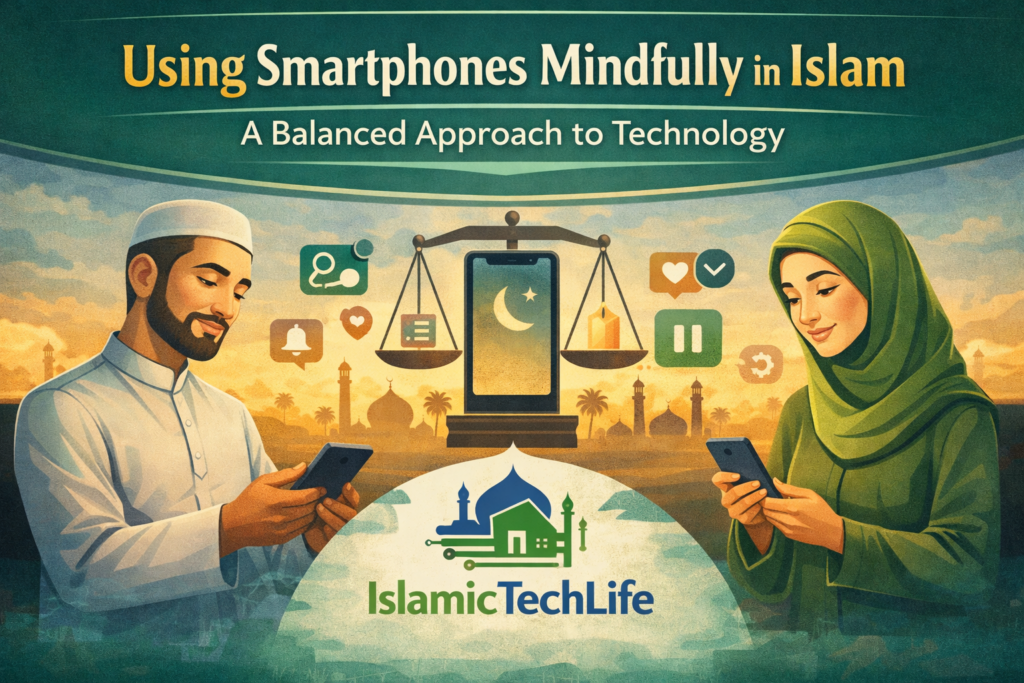
Practicing Using Smartphones Mindfully in Islam helps Muslims avoid digital distractions while maintaining discipline, productivity, and spiritual focus.
Understanding Mindfulness from an Islamic Perspective
Mindfulness in Islam is closely connected to taqwa (God-consciousness) and muhasabah (self-accountability). Being mindful means being aware of our actions, intentions, and their consequences—both in this world and the hereafter.
When applied to smartphone usage, mindfulness involves:
- Awareness of time spent on the device
- Conscious choice of content consumed
- Control over habits and distractions
- Aligning digital behavior with Islamic ethics
Islam encourages balance, not extremism. Completely abandoning smartphones is neither practical nor necessary. Instead, Muslims are encouraged to use technology with purpose.
🧭 Why Using Smartphones Mindfully in Islam Has Become Essential Today
Modern smartphones are designed to capture attention continuously through notifications, endless feeds, and algorithm-driven content. Without awareness, users can easily lose hours scrolling, switching apps, and consuming content with little real benefit. For Muslims, this creates a serious challenge because time, focus, and intention are sacred trusts.
Using Smartphones Mindfully in Islam helps believers regain control over attention, habits, and spiritual priorities. Instead of reacting impulsively to every alert or update, mindfulness encourages intentional usage aligned with faith and responsibility.
Many Muslims today struggle with balancing productivity, worship, family life, and digital demands. By consciously practicing Using Smartphones Mindfully in Islam, individuals can reduce distractions, protect mental clarity, and strengthen self-discipline. Mindful usage transforms smartphones from sources of stress into tools of benefit.
When technology supports values rather than replacing them, spiritual stability and emotional balance naturally improve.
Smartphones as a Blessing When Used Correctly
When used mindfully, smartphones can be a powerful blessing.
Positive Uses of Smartphones for Muslims
- Access to Quran apps and tafsir
- Prayer time reminders and Qibla direction
- Online Islamic classes and lectures
- Educational and career development resources
- Staying connected with family and community
- Managing halal businesses and online work
These uses align with the Islamic principle of beneficial knowledge (Ilm Naf’e) and productive living.
The Hidden Dangers of Uncontrolled Smartphone Use
Despite their benefits, smartphones can easily become harmful when used excessively or without boundaries.
Common Issues Faced by Muslims Today
- Endless scrolling and time wastage
- Addiction to social media validation
- Exposure to inappropriate or harmful content
- Reduced concentration in salah and ibadah
- Neglect of family, health, and responsibilities
- Sleep disruption and mental fatigue
Islam warns against israf (excess) and wasting time—both of which are common outcomes of unmanaged smartphone use.
Time as an Amanah (Trust)
In Islam, time is a trust given by Allah. Every moment spent will be accounted for.
Using smartphones mindfully means asking:
- Is this activity beneficial?
- Is it necessary right now?
- Is it affecting my salah, sleep, or responsibilities?
Simple awareness can drastically reduce unnecessary usage.
⏳ How Using Smartphones Mindfully in Islam Protects Barakah in Time
Barakah in time refers to achieving meaningful outcomes within limited hours. Many people feel constantly busy yet unproductive because attention is fragmented across digital platforms. Uncontrolled phone usage drains energy, focus, and spiritual awareness.
Practicing Using Smartphones Mindfully in Islam helps Muslims protect barakah by intentionally choosing when and how devices are used. Scheduling focused work sessions, limiting notifications, and reducing unnecessary screen exposure allow deeper concentration and improved quality of effort.
Mindful phone usage also prevents time leakage during critical moments such as prayer preparation, family interaction, and personal reflection. When Muslims prioritize purpose over impulse, productivity increases while stress decreases.
Over time, consistent application of Using Smartphones Mindfully in Islam builds stronger habits, healthier routines, and improved emotional stability. Small daily improvements compound into long-term personal growth.
Practical Ways to Use Smartphones Mindfully in Islam
1. Set Clear Intentions (Niyyah)
Before unlocking your phone, pause briefly and ask:
- Why am I using this right now?
- Is it for benefit or habit?
Using smartphones with intention transforms them from distractions into tools.
2. Control Screen Time Without Guilt
Islam promotes moderation, not guilt.
Practical steps:
- Use built-in screen time limits
- Allocate specific times for social media
- Avoid phone use during salah, meals, and family time
Discipline creates freedom, not restriction.
3. Protect the Eyes and Heart
What we see affects what we feel.
Mindful smartphone use includes:
- Avoiding inappropriate visuals
- Unfollowing harmful or toxic accounts
- Choosing content that uplifts, educates, or benefits
This aligns with Islamic teachings on guarding one’s gaze and heart.
4. Smartphones and Salah Focus
One of the biggest challenges today is distraction in prayer.
Helpful practices:
- Put phone on silent before salah
- Keep it out of sight during prayer
- Avoid scrolling immediately before praying
Small changes can greatly improve khushu (concentration).
5. Digital Minimalism from an Islamic Lens
Digital minimalism means using technology intentionally rather than compulsively.
Islamic digital minimalism includes:
- Fewer apps, more purpose
- Less consumption, more creation
- Silence over noise
- Quality over quantity
This approach supports mental clarity and spiritual growth.
Smartphones, Mental Health, and Islam
Excessive smartphone use is linked to:
- Anxiety
- Comparison culture
- Reduced self-esteem
- Sleep disorders
Islam encourages mental balance through:
- Regular prayer
- Reflection
- Gratitude
- Community interaction
Mindful smartphone use complements these practices rather than replacing them.
🧠 Digital Overstimulation, Dopamine Cycles, and Self-Control
Smartphone apps are engineered to stimulate dopamine through likes, notifications, and continuous novelty. While this increases engagement, it can also create dependency, reduced attention span, and emotional imbalance. Islam encourages mastery over desires and disciplined self-control.
Using Smartphones Mindfully in Islam breaks addictive cycles by restoring conscious choice. Reducing unnecessary notifications, limiting social media exposure, and creating screen-free zones in daily life improves emotional regulation and mental clarity.
Islamic practices such as prayer, remembrance, gratitude, and reflection naturally support emotional balance. When smartphone usage aligns with these practices instead of replacing them, overall mental well-being improves significantly.
By consistently practicing Using Smartphones Mindfully in Islam, Muslims develop resilience against digital addiction and regain authority over attention and behavior.
Teaching Children and Families Mindful Phone Usage
Parents play a key role in setting digital habits.
Islamic guidance for families:
- Set device-free times at home
- Encourage offline play and learning
- Be role models in phone usage
- Discuss ethics, not just rules
Children learn more from observation than instruction.
Using Smartphones as a Tool for Good Deeds
A mindful Muslim uses smartphones to increase good deeds, such as:
- Sharing beneficial reminders
- Learning new skills
- Helping others through digital platforms
- Supporting halal online initiatives
Technology can be a form of sadaqah jariyah when used correctly.
Balance Between Dunya and Akhirah
Islam teaches balance—not withdrawal from the world.
Using smartphones mindfully allows Muslims to:
- Stay productive in dunya
- Stay conscious of akhirah
- Avoid extremes of addiction or rejection
The goal is control, not elimination.
🌍 Community Influence and Setting Positive Digital Examples
Personal digital behavior influences families, friends, and communities. Children observe adult habits closely and often mirror digital behaviors unconsciously. Practicing Using Smartphones Mindfully in Islam helps establish healthy norms within households and social circles.
When adults demonstrate balanced phone usage, respectful online behavior, and disciplined screen habits, younger generations naturally adopt similar patterns. Community-level awareness also reduces normalization of addiction and excessive digital dependence.
Mindful smartphone usage strengthens interpersonal communication, emotional presence, and spiritual atmosphere within families and communities. Over time, practicing Using Smartphones Mindfully in Islam contributes to healthier relationships, stronger focus, and improved collective discipline.
🌙 Spiritual Presence, Reflection, and Digital Intentionality
One of the greatest benefits of Using Smartphones Mindfully in Islam is the ability to preserve spiritual presence in daily life. Constant digital noise often reduces moments of reflection, gratitude, and remembrance. Notifications interrupt quiet thinking, while endless feeds occupy mental space that could otherwise be used for spiritual awareness.
Intentional smartphone usage creates room for mindfulness, reflection, and conscious living. Simple habits such as keeping the phone away during quiet moments, avoiding unnecessary multitasking, and scheduling short digital breaks allow the heart and mind to reset. This supports deeper focus in prayer, improved emotional balance, and stronger self-awareness.
Islam encourages reflection on actions, time, and purpose. When Muslims practice Using Smartphones Mindfully in Islam, they naturally become more aware of how small habits shape long-term character. Choosing purposeful engagement over impulsive consumption strengthens discipline and self-control.
Digital intentionality also improves gratitude. Instead of constantly comparing lifestyles or chasing virtual validation, mindful users appreciate real-life blessings, relationships, and opportunities. Over time, Using Smartphones Mindfully in Islam cultivates calmness, clarity, and contentment — allowing technology to remain a servant rather than a master.
Final Thoughts: Mindful Use Over Mindless Consumption
Smartphones are neither inherently good nor bad. Their impact depends on how and why they are used.
By applying Islamic principles such as intention, moderation, accountability, and self-discipline, Muslims can turn smartphones into tools of benefit rather than sources of distraction.
Mindful smartphone use is not about perfection—it is about awareness.
When technology serves your values instead of controlling them, it becomes a blessing rather than a burden.
Islamic guidance on moderation
accountability of time in Islam
By practicing Using Smartphones Mindfully in Islam, Muslims can stay productive, protect their faith, and maintain balance between dunya and akhirah.
Halal content creation for Muslims
Halal digital lifestyle for Muslims