Digital detox in Ramadan is becoming essential for Muslims who want to protect their time, focus on ibadah, and reduce social media distractions during the holy month. Ramadan is a sacred time of fasting, reflection, self-discipline, and spiritual renewal. However, in today’s hyper-connected world, many Muslims find themselves struggling with constant notifications, social media scrolling, and digital distractions that steal precious moments meant for worship and reflection.
Ramadan is a sacred month of fasting, reflection, self-discipline, and spiritual renewal. However, in today’s hyper-connected world, many Muslims find themselves struggling with constant notifications, social media scrolling, and digital distractions that steal precious moments meant for worship and reflection.
Practicing a digital detox in Ramadan does not mean abandoning technology completely. Instead, it means using technology mindfully, reducing harmful digital habits, and reclaiming time for Quran, dua, salah, and meaningful family interactions.
This complete guide will help you understand how to reduce social media usage, control screen time, and build healthier digital habits during Ramadan—without disconnecting from necessary work or family communication.
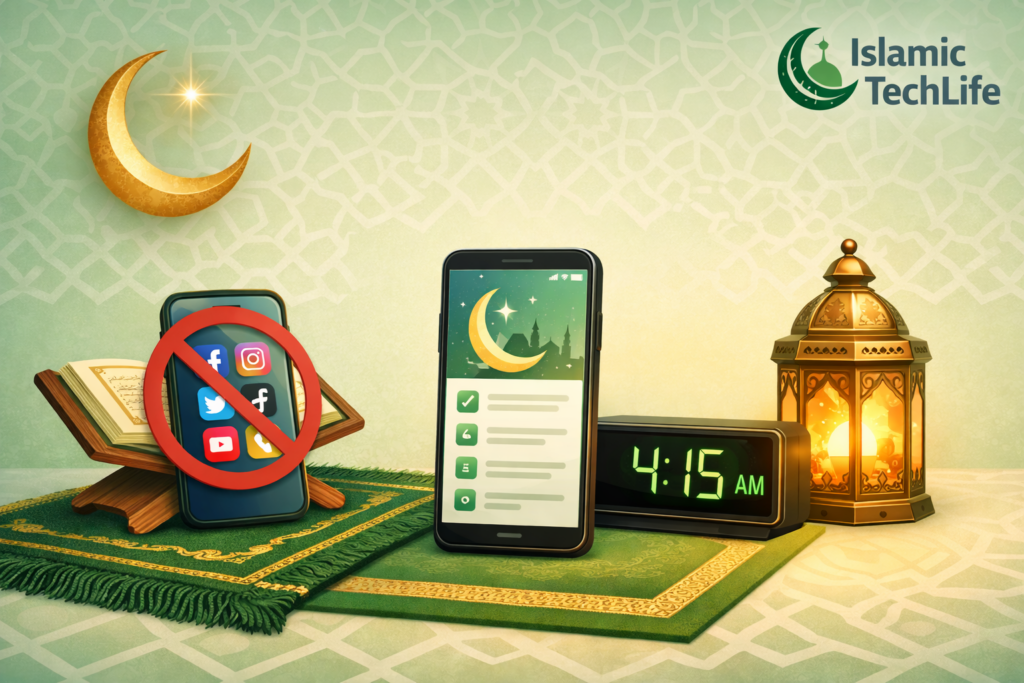
Table of Contents
🤲 Why Digital Detox in Ramadan Is Important
In Islam, time is an amanah (trust). Ramadan multiplies the rewards of good deeds, but it also magnifies the loss when time is wasted. Endless scrolling, binge-watching, and compulsive phone checking can silently steal hours every day.
Allah reminds us about the value of time in Surah Al-Asr (Quran 103:1–3). The Prophet ﷺ also said that many people waste two great blessings: health and free time (Sahih Bukhari 6412).
A digital detox in Ramadan helps Muslims:
- Increase mindfulness in worship
- Reduce mental clutter and anxiety
- Improve focus in salah and Quran
- Create space for reflection and dua
- Strengthen family and community bonds
📱 How Social Media Affects Spiritual Focus in Ramadan
Social media platforms are designed to keep users hooked. Short videos, notifications, and infinite feeds stimulate dopamine in the brain, making it difficult to disengage. During Ramadan, this constant stimulation weakens khushu (focus) in prayer and reduces the quality of worship.
Common digital challenges during Ramadan include:
- Checking phones immediately after Iftar
- Late-night scrolling after Taraweeh
- Waking up to notifications before Fajr
- Comparing one’s worship with others online
- Consuming content that distracts from spiritual goals
A successful digital detox in Ramadan starts with awareness of these patterns.
🧠 The Psychology Behind Digital Addiction
Understanding the psychology of digital addiction helps you control it. Apps are built to exploit human attention through:
- Infinite scroll
- Variable rewards (likes, comments)
- Visual stimulation
- Instant gratification
When fasting, the brain becomes more sensitive to stimulation. Reducing digital noise allows the mind to settle, improving emotional balance and spiritual presence. This is why a digital detox in Ramadan can feel mentally refreshing and spiritually grounding.
⏰ Practical Digital Detox Plan for Ramadan
A digital detox does not require extreme measures. Small intentional steps can create powerful change.
🔹 Step 1: Set Clear Digital Boundaries
- Turn off non-essential notifications
- Remove social media apps temporarily
- Use app timers to limit usage
- Avoid phone usage during prayer times
🔹 Step 2: Create Phone-Free Zones
- No phone during Iftar
- No phone during Quran reading
- No phone in the masjid
- No phone 30 minutes before sleep
🔹 Step 3: Replace Screen Time with Ibadah
- Read Quran when tempted to scroll
- Make dhikr during waiting times
- Listen to Islamic lectures instead of entertainment
- Reflect quietly after prayers
These steps help establish a sustainable digital detox in Ramadan.
🕌 Using Technology Positively During Ramadan
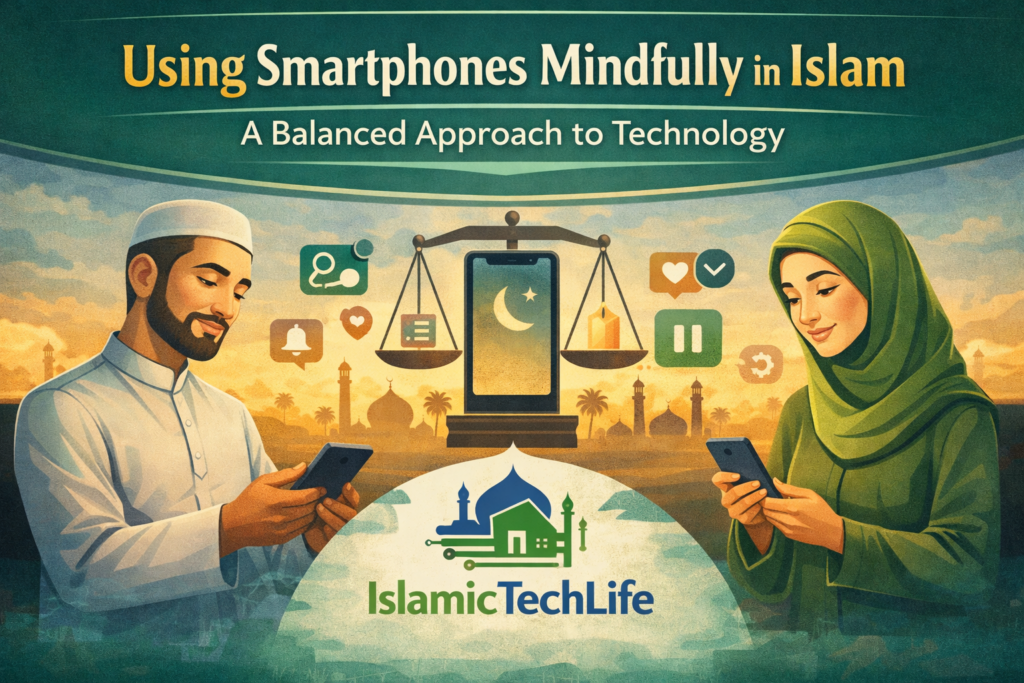
Islam does not reject technology. The goal is to use it intentionally.
Productive Digital Tools:
- Quran apps with daily recitation goals
- Prayer time reminders
- Online tafsir lectures
- Charity donation platforms
- Ramadan planners
When used wisely, technology can enhance your Ramadan instead of distracting from it.
👨👩👧 Family Digital Detox in Ramadan
Digital habits affect the entire household. Ramadan is an ideal time to create a spiritually focused family environment.
Family Detox Tips:
- Phone-free Iftar table
- Shared Quran reading sessions
- Family dua time
- Reduced TV usage
- Encouraging children to reduce screen time
A collective digital detox in Ramadan strengthens family bonds and builds healthy long-term habits.
🧑🎓 Digital Detox for Students in Ramadan
Students often face the challenge of online learning, exams, and social media pressure during Ramadan.
Tips:
- Study in focused time blocks
- Avoid social media between study sessions
- Use productivity apps instead of entertainment apps
- Replace late-night scrolling with revision or reflection
This approach helps students maintain a balanced digital detox in Ramadan while meeting academic goals.
💼 Digital Detox for Working Professionals
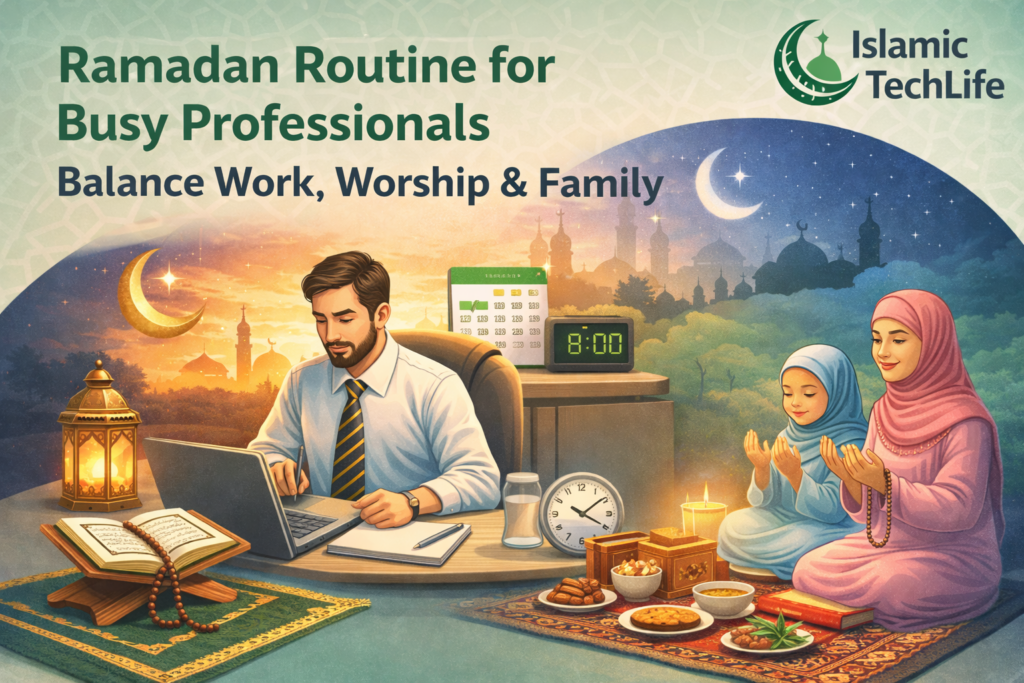
Professionals can practice digital detox without harming productivity:
- Check emails at fixed intervals
- Avoid unnecessary meetings
- Reduce WhatsApp group noise
- Take short breaks for prayer instead of scrolling
Work performed with intention becomes worship during Ramadan.
⚖️ Common Mistakes During Digital Detox
- Going extreme and quitting all communication
- Feeling guilty for necessary work usage
- Replacing social media with excessive TV
- Not setting realistic goals
Balance is key to a successful digital detox in Ramadan.
📅 7-Day Digital Detox Challenge (Ramadan Friendly)
Day 1: Track your screen time
Day 2: Remove one distracting app
Day 3: Phone-free Iftar
Day 4: No social media after Maghrib
Day 5: Quran before phone
Day 6: Silent notifications during prayers
Day 7: Reflection and reset
This challenge helps you gradually implement a digital detox in Ramadan.
🌱 Long-Term Benefits of Digital Detox in Ramadan
- Improved concentration
- Better sleep quality
- Stronger spiritual presence
- Reduced anxiety
- Healthier digital habits
- Increased quality family time
These benefits often continue long after Ramadan ends.
🧭 Life After Ramadan: Sustaining Digital Balance
The purpose of Ramadan is transformation. Continue these habits:
- Set daily screen limits
- Protect prayer times from distractions
- Maintain Quran reading routines
- Practice weekly digital detox hours
A balanced digital lifestyle aligns with Islamic values.
🌍 Real-Life Examples of Digital Detox in Ramadan
Understanding the concept of digital detox in Ramadan becomes easier when we observe real-life situations. Many Muslims struggle silently with excessive screen time without realizing how much spiritual opportunity is lost daily.
👨💼 Example 1: A Working Professional
A working professional spends most of the day on emails, WhatsApp messages, and online meetings. During Ramadan, he decides to practice digital boundaries by checking emails at fixed times, muting unnecessary WhatsApp groups, and avoiding social media after Iftar. Over time, he finds more peace of mind, improved focus in salah, and greater presence during family Iftar.
🎓 Example 2: A Student Preparing for Exams
A student fasting while studying faces fatigue and digital distraction. By reducing social media usage and replacing scrolling with Quran recitation during breaks, the student finds that concentration improves. This balanced approach shows that digital detox in Ramadan does not mean quitting technology but using it intentionally.
🏡 Example 3: A Family Practicing Collective Detox
A family decides to keep phones away from the dining table during Iftar and after Maghrib. They pray together, share reflections, and read Quran as a family. This collective digital discipline strengthens family bonds and creates a spiritually nourishing home environment.
🧠 Spiritual & Mental Benefits of Digital Detox in Ramadan
Beyond productivity, a digital detox in Ramadan brings significant mental health benefits. Constant digital stimulation overloads the brain and reduces emotional resilience. When Muslims reduce screen exposure, the mind experiences calmness and clarity.
Fasting already trains self-control. Combining fasting with controlled digital usage strengthens patience, mindfulness, and emotional regulation. Many people report better sleep quality, reduced anxiety, and increased spiritual satisfaction when they reduce nighttime scrolling during Ramadan.
📅 Creating a Personal Digital Detox Plan for Ramadan
A simple personal plan makes digital detox sustainable:
- Identify top distracting apps
- Set daily screen-time limits
- Designate phone-free worship time
- Schedule digital-free periods after Maghrib
- Reflect weekly on progress
Consistency is more important than perfection. Even reducing digital consumption by 30–40% during Ramadan can bring noticeable improvements in spiritual focus.
⚖️ Balancing Technology Without Guilt
Islam does not discourage beneficial technology. The goal of digital detox in Ramadan is not rejection of modern tools but mastery over them. Using technology for work, learning, and family communication is permissible and often necessary. The key is intentionality—ensuring that technology serves your values rather than controlling your time.
🌱 Carrying Digital Detox Habits Beyond Ramadan
The real success of digital detox in Ramadan appears after Ramadan ends. Habits such as controlled screen time, mindful content consumption, and protected prayer moments can become permanent lifestyle changes. Ramadan becomes a training ground for digital discipline that continues throughout the year.
🧩 Common Digital Distractions That Ruin Focus in Ramadan
Many Muslims start Ramadan with good intentions but unknowingly fall into common digital traps that slowly reduce spiritual focus. Recognizing these distractions is the first step toward practicing a meaningful digital detox in Ramadan.
One of the biggest distractions is endless short-form video content. Platforms like Instagram Reels, YouTube Shorts, and TikTok are designed to keep users scrolling without realizing how much time has passed. During Ramadan, this habit can silently consume the most spiritually valuable moments of the day—especially after Iftar and before sleep.
Another major distraction is constant message checking. Family WhatsApp groups, office chats, and community announcements can create notification overload. While communication is important, frequent interruptions break concentration during prayer, Quran recitation, and reflection. Muting non-essential groups during worship times can significantly improve focus.
Late-night screen usage is another hidden productivity killer. Many people scroll their phones after Taraweeh, which delays sleep and reduces energy for Suhoor and Fajr. Poor sleep patterns weaken both physical stamina and spiritual presence. Practicing a digital detox in Ramadan includes setting a clear boundary for night-time phone usage to protect rest and worship quality.
🛠️ Practical Tools to Support Digital Detox in Ramadan
Digital detox does not mean avoiding technology completely. In fact, certain tools can help Muslims control digital habits more effectively during Ramadan.
Smartphone features such as screen time limits, focus mode, and do-not-disturb settings allow users to block distracting apps during specific hours. For example, you can schedule social media restrictions during Maghrib to Isha time so your evenings remain spiritually focused.
Another helpful practice is using intentional reminders. Setting gentle alarms for prayer, Quran reading, or reflection helps replace unconscious scrolling with purposeful action. Some Muslims also find it helpful to place physical reminders—such as keeping the phone in another room during worship—to create psychological distance from distractions.
Replacing digital habits with meaningful alternatives is equally important. Keeping a Quran or dua book nearby makes it easier to choose remembrance over scrolling. These small environmental changes play a powerful role in sustaining a successful digital detox in Ramadan.
🤝 Community Support for Digital Detox During Ramadan
Spiritual growth becomes easier when supported by community. Practicing digital detox in Ramadan as a group creates accountability and motivation. Families, friends, or masjid groups can collectively agree on simple detox practices such as phone-free Iftar, reduced social media use, or shared Quran reading sessions.
Community challenges—like “No Social Media After Maghrib” or “One Hour Screen-Free Daily”—create positive peer pressure. When people see others making the effort, they feel encouraged to stay committed. Online Muslim communities can also promote mindful technology use by sharing beneficial reminders instead of distractions.
Ramadan is not meant to be a solitary journey. Supporting each other in reducing digital distractions strengthens collective spiritual energy and fosters a healthier digital culture within the Muslim community.
🌙 Reflective Practice: Turning Digital Silence into Spiritual Presence
A key element of digital detox in Ramadan is learning to embrace moments of silence. When phones are put away, the initial feeling of restlessness is natural. Over time, however, silence becomes a space for reflection, gratitude, and deeper connection with Allah.
Use quiet moments to engage in self-reflection. Ask yourself:
- How did I spend my time today?
- Did my digital habits support my spiritual goals?
- What small change can I make tomorrow?
This reflective practice transforms digital silence into spiritual presence. Instead of filling every moment with content consumption, Muslims learn to fill their hearts with remembrance. This shift in mindset is one of the most powerful long-term outcomes of practicing digital detox in Ramadan.
🏁 Closing Reflection
Ramadan is a rare spiritual opportunity. When distractions are reduced, the heart becomes more receptive to remembrance of Allah. A sincere digital detox in Ramadan is not about becoming disconnected from the world, but about reconnecting with your soul, your purpose, and your Creator.
🔗 Internal Links
- https://islamictechlife.com/managing-screen-time-for-muslims
- https://islamictechlife.com/social-media-ethics-in-islam
- https://islamictechlife.com/technology-as-a-tool-not-a-lifestyle