In today’s digital world, halal content creation for Muslims has become one of the most powerful ways to influence minds, share knowledge, build communities, and earn halal income. From blogs and YouTube channels to podcasts, social media platforms, newsletters, and AI-assisted tools, Muslims are actively participating in the creator economy like never before.
However, with this opportunity comes responsibility.
Building a sustainable halal content creation for Muslims strategy requires sincerity, discipline, and ethical consistency.
Halal content creation for Muslims is not just about views, followers, or monetization. It is an amanah (trust). Every word written, image shared, video uploaded, and idea promoted will be questioned. Islam teaches accountability for influence, speech, and intention.
This comprehensive guide explains how Muslims can create content with sincerity (niyyah), ethical responsibility, professional excellence, and long-term impact — while remaining aligned with Islamic values in a fast-moving digital ecosystem.
Whether you run a blog like IslamicTechLife, a YouTube channel, a podcast, or a social media brand, this article will help you build a halal content strategy that benefits both dunya and akhirah.
🌍 Why Halal Content Creation for Muslims Matters in the Digital Age
Digital platforms shape opinions, behavior, culture, and values. Algorithms amplify voices rapidly, making content creators powerful influencers — whether intentionally or not.
For Muslims, this influence comes with moral responsibility.
Content can:
- 📈 Educate or mislead
- 🌱 Inspire or corrupt
- 🤝 Unite or divide
- 🧠 Strengthen or weaken faith
- 💼 Generate halal income or doubtful earnings
Halal content creation for Muslims ensures that influence remains ethical, truthful, beneficial, and spiritually safe. It protects both the creator and the audience from harmful impact.
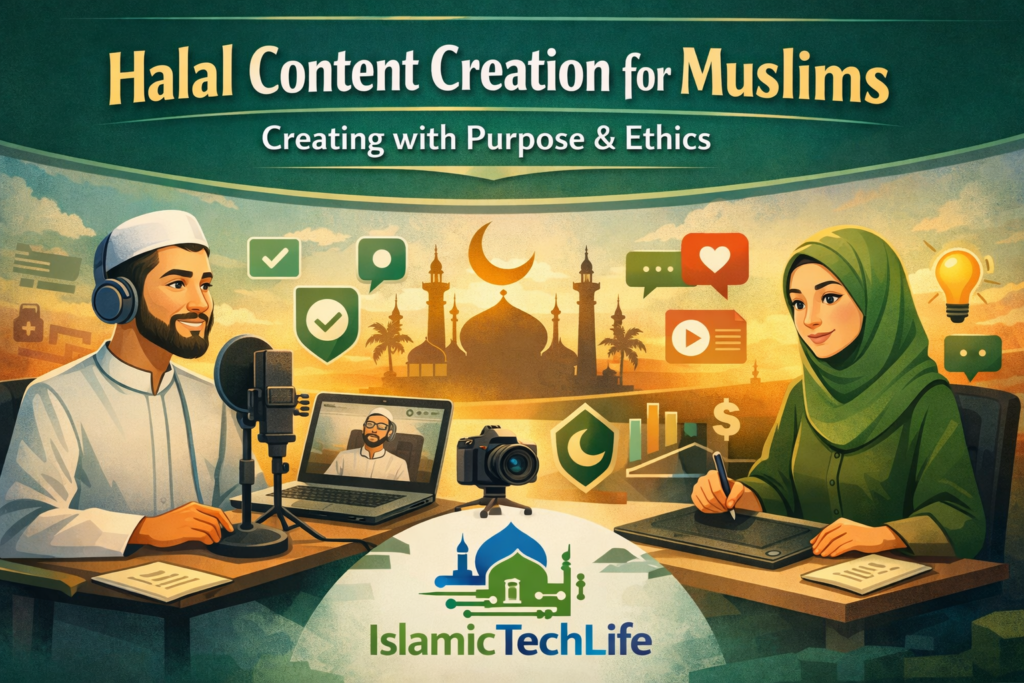
Table of Contents
🧠 What Is Halal Content Creation?
Halal content creation refers to producing digital content that:
- ✔️ Complies with Islamic principles
- ✔️ Avoids haram and doubtful elements
- ✔️ Promotes truth, benefit, and responsibility
- ✔️ Respects human dignity and modesty
- ✔️ Maintains honesty and transparency
- ✔️ Seeks positive impact
Halal content is not limited to religious topics. Muslims can create content about:
- Technology
- Education
- Business
- Fitness
- Productivity
- Design
- Marketing
- Lifestyle
As long as both the content and the process remain halal, the work is permissible and rewarding.
🕌 The Islamic Foundation of Content Creation
Islam places great emphasis on speech, intention, and accountability.
1️⃣ Intention (Niyyah)
The Prophet ﷺ said:
“Actions are judged by intentions.”
Before creating content, ask:
- Am I benefiting people?
- Am I spreading truth or confusion?
- Is this pleasing to Allah?
- Am I chasing ego or serving purpose?
Even monetized content can be halal when intention remains sincere and ethical standards are maintained.
2️⃣ Accountability for Words and Influence
Islam teaches that every word carries weight. Digital content lasts long and spreads fast.
Creators must avoid:
- Misinformation
- Harmful trends
- Sensationalism
- Exploitation
- Manipulation
Influence must be handled with responsibility.
⚖️ Core Principles of Halal Content Creation
Every successful halal content creation for Muslims model begins with truthfulness, accountability, and beneficial intention.
1️⃣ Truthfulness and Authenticity
Islam strictly prohibits lying, exaggeration, and deception.
Avoid:
- Fake clickbait titles
- False promises
- Misleading thumbnails
- Plagiarized content
- AI output without verification
Best practice: Always verify sources and remain transparent.
2️⃣ Avoiding Haram and Doubtful Content
Stay away from:
- Pornographic or suggestive imagery
- Profanity and abusive language
- Promotion of alcohol, gambling, drugs
- Deceptive marketing
- Exploitative sponsorships
When doubtful, choose caution (taqwa).
3️⃣ Respecting Modesty (Haya)
Modesty applies to:
- Visual presentation
- Language
- Body exposure
- Thumbnails and captions
- Tone and attitude
Engagement never requires compromising dignity.
4️⃣ Beneficial Knowledge (Ilm Naf’e)
Ask:
- Does this help someone?
- Does this solve a real problem?
- Does it encourage goodness?
Content should uplift, educate, or improve lives.
🧠 Digital Influence, Responsibility, and Accountability in Islam
In the digital age, content creators carry enormous influence. A single post can reach thousands or even millions of people within hours. This power requires responsibility, wisdom, and accountability. Islam teaches that influence is a trust, and every individual will be questioned about how they used it.
Words have lasting impact. Once something is published online, it can be shared, copied, and preserved for years. Even deleted content can resurface. This permanence means creators must carefully consider the consequences of what they publish. Harmful ideas, misinformation, or immoral imagery can continue affecting others long after the original creator has moved on.
Islam encourages Muslims to use influence for good, promoting justice, honesty, compassion, and beneficial knowledge. A halal content creator should always evaluate whether content builds or damages character, strengthens or weakens faith, and benefits or harms society.
Responsible influence includes correcting mistakes publicly, acknowledging sources honestly, and avoiding sensationalism for short-term growth. Accountability protects both the creator and the audience from long-term harm.
🖥️ Halal Content Creation Across Platforms
✍️ Blogging (Like IslamicTechLife)
Ideal for:
- Educational guides
- Ethical tech insights
- Long-form tutorials
- SEO-driven learning
- Sustainable traffic
Best practices:
- Original writing
- Proper citations
- Avoid AI plagiarism
- Ethical SEO practices
🎥 YouTube & Video Content
Halal video strategies:
- Faceless educational videos
- Screen recordings
- Animation explainers
- Voice narration
- Clean visuals
Avoid questionable thumbnails and background elements.
📱 Social Media Content
Key principles:
- Avoid vanity obsession
- Avoid trend chasing
- Maintain respectful tone
- Provide value consistently
- Protect privacy
💰 Halal Monetization: Earning Without Compromise
Ethical monetization strengthens the long-term sustainability of halal content creation for Muslims.
Yes — halal content creation for Muslims can generate halal income.
✅ Halal Monetization Methods
- Ethical ad networks
- Halal affiliate products
- Courses and ebooks
- Consulting services
- Membership communities
- Donations
❌ What to Avoid
- Haram advertisements
- Fake reviews
- Manipulative funnels
- Clickbait deception
- Questionable sponsors
Integrity brings barakah.
📊 Financial Transparency, Trust, and Audience Responsibility
Trust is the foundation of sustainable content creation. Audiences follow creators because they believe in their honesty, authenticity, and integrity. Islam strongly emphasizes fair dealing, transparency, and avoiding deception in financial matters.
Halal content creators must clearly disclose sponsorships, affiliate links, and paid partnerships. Hiding financial relationships damages trust and may lead to misleading audiences. Transparency protects both legal compliance and Islamic ethics.
Creators should carefully review advertising networks and partners to ensure that promoted products and services align with halal values. Even indirect promotion of harmful products can negatively affect credibility and spiritual accountability.
Pricing digital products fairly, delivering promised value, honoring refunds, and maintaining professional communication are part of Islamic business ethics. Long-term trust generates sustainable growth and barakah in income.
🤖 The Role of Technology and AI in Halal Content Creation
AI tools are halal when used ethically.
Permissible uses:
- Idea generation
- Editing assistance
- Grammar improvement
- Research summarization
- Visual design (within halal limits)
Avoid:
- Deepfakes
- Plagiarism
- Fake authority
- Manipulative automation
Human responsibility remains essential.
🔍 Content Accuracy, Research Ethics, and Information Verification
The internet contains massive amounts of information, but not all of it is reliable. Misinformation spreads rapidly, especially when content creators prioritize speed over accuracy. Islam encourages verification, caution, and honesty when sharing knowledge.
Before publishing any claim, creators should verify sources, cross-check facts, and consult authentic references. Quoting unreliable sources or spreading unverified claims can mislead audiences and damage credibility.
Using AI tools for research assistance should never replace human responsibility. AI-generated content may contain errors, bias, or fabricated data. Creators must review, correct, and validate all AI output before publishing.
Proper citation, respecting copyright laws, and avoiding plagiarism demonstrate ethical professionalism. Accuracy builds trust and protects both spiritual accountability and audience confidence.
⚠️ Challenges Muslim Content Creators Face
Common challenges:
- Algorithm bias
- Ethical pressure
- Monetization restrictions
- Public criticism
- Cultural misunderstanding
Solution: Consistency, patience, integrity.
🌱 Content Creation as Dawah (Without Preaching)
Dawah can be subtle:
- Professionalism
- Ethics
- Respect
- Consistency
- Honesty
Actions often speak louder than words.
🌐 Building Audience Trust Through Consistency and Integrity
Trust is the foundation of every successful content creator. Audiences follow creators not only for information, but for reliability, honesty, and authenticity. In Islam, trustworthiness (amanah) is a core value that applies equally to digital work.
Consistency builds credibility. Publishing regularly, maintaining quality standards, and staying aligned with ethical values create long-term audience loyalty. Sudden changes in tone, misleading promotions, or inconsistent messaging weaken trust and damage reputation.
Integrity means staying honest even when shortcuts appear tempting. Avoid exaggerating achievements, manipulating analytics, copying others’ work, or using deceptive marketing strategies. Growth achieved through unethical practices rarely lasts and often leads to loss of credibility and spiritual accountability.
Engaging respectfully with audiences, responding thoughtfully to feedback, and acknowledging mistakes openly strengthen authenticity. Trust compounds over time and becomes one of the most valuable assets for a halal content brand.
🏗️ Building a Halal Content Brand
A strong halal brand is built on:
- Trust
- Value
- Consistency
- Ethics
- Transparency
Long-term reputation beats viral success.
🌍 Community Impact, Representation, and Long-Term Legacy
Muslim content creators represent Islam whether they intend to or not. Audiences often associate behavior, ethics, professionalism, and communication style with broader religious identity. This responsibility requires patience, humility, and wisdom.
Positive representation helps reduce stereotypes, promote understanding, and build bridges between communities. Even non-religious content created ethically reflects Islamic values through conduct and character.
Creators should consider long-term legacy rather than temporary popularity. Content that teaches, inspires, or solves problems continues benefiting people long after publication. This ongoing benefit becomes a form of sadaqah jariyah when intention is sincere.
Building a positive digital legacy requires consistency, sincerity, continuous learning, and adaptability. The goal is not only to grow metrics but to leave meaningful impact that benefits society and pleases Allah.
🧩 Continuous Learning, Skill Development, and Creative Excellence
Halal content creation is not only about avoiding harm but also about striving for excellence (ihsaan). Improving writing skills, communication clarity, design quality, storytelling ability, and technical knowledge helps creators deliver greater value to their audience.
Continuous learning allows creators to stay updated with platform changes, algorithm shifts, ethical guidelines, and emerging technologies. Investing time in learning improves efficiency and creativity while maintaining professional standards.
Creative excellence includes thoughtful research, clear structure, engaging presentation, and consistent branding. High-quality work reflects sincerity and respect for the audience’s time and attention.
By continuously refining skills and improving content quality, Muslim creators can compete professionally while remaining ethically grounded.
🔄 Patience, Consistency, and Long-Term Vision in Content Creation
Meaningful growth in content creation rarely happens overnight. Algorithms change, audience trust takes time to build, and ethical creators often grow slower than sensational channels. Islam teaches patience (sabr), consistency, and long-term vision as keys to success.
Muslim creators should avoid comparing themselves with others or chasing quick fame. Sustainable impact comes from showing up regularly, improving skills gradually, and maintaining ethical boundaries even during slow growth phases. Small but consistent effort compounds into lasting results.
Long-term vision allows creators to focus on meaningful contribution rather than temporary popularity. When sincerity guides effort, success arrives in ways that bring peace, stability, and barakah rather than stress and compromise.
🌟 Final Thoughts: Creating for the Akhirah and the Algorithm
Create with:
- Purpose over popularity
- Integrity over income
- Impact over impressions
If your content benefits even one person, it is success.
May Allah place barakah in your efforts and make your work sadaqah jariyah.
Ameen 🤲
By practicing halal content creation for Muslims, creators protect both their audience and their spiritual accountability.
🔗 Internal Link
🔗 External Link
- Practical guidance on responsible digital behavior and digital citizenship is also available from
Common Sense Media, which focuses on ethical technology use and online responsibility. - Academic perspectives on ethical media responsibility are discussed in depth by the
Stanford Encyclopedia of Philosophy, highlighting the importance of truth and accountability in content creation.