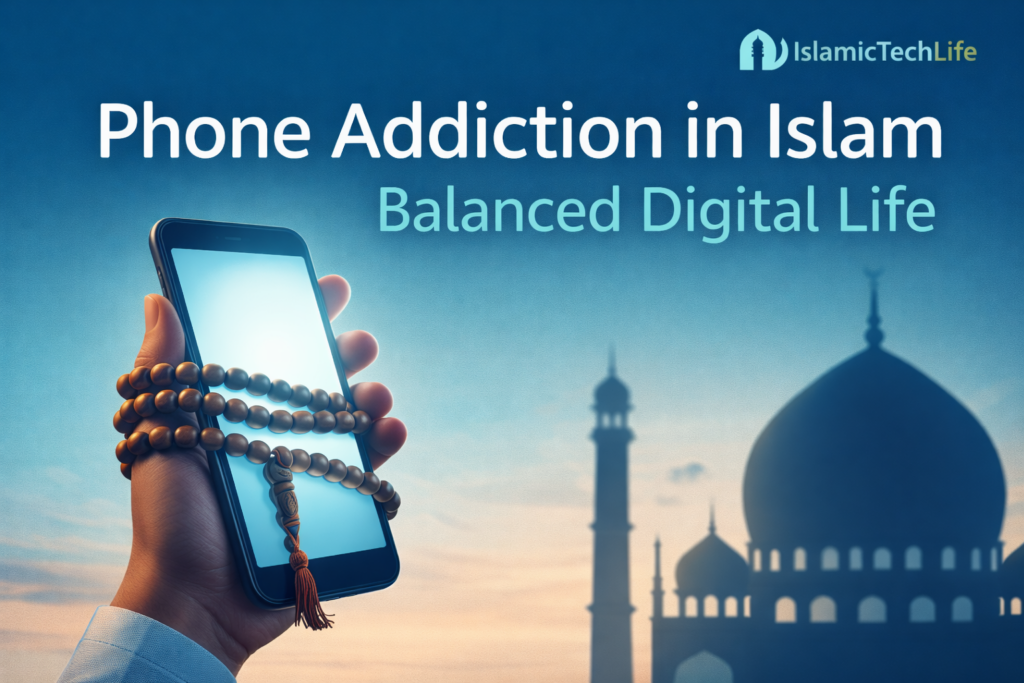
Phone addiction in Islam is becoming a serious challenge for many Muslims in today’s digital world. Smartphones have become essential in our daily lives. From work communication to Islamic learning apps, technology helps Muslims stay connected, productive, and informed. However, excessive phone usage can quietly turn into addiction, harming our iman, productivity, family relationships, and mental health.
Smartphones have become essential in our daily lives. From work communication to Islamic learning apps, technology helps Muslims stay connected, productive, and informed. However, excessive phone usage can quietly turn into addiction, harming our iman, productivity, family relationships, and mental health.
Islam encourages balance (wasatiyyah) in all aspects of life — including technology. This guide explains how Muslims can overcome phone addiction without completely abandoning modern tools.
Table of Contents
What Is Phone Addiction in Islam?
Phone addiction is the compulsive urge to check your phone repeatedly, even when it disrupts work, worship, sleep, and relationships. Signs include:
Constant scrolling without purpose
Delaying salah because of phone usage
Reduced concentration in Qur’an and dua
Anxiety when the phone is not nearby
Poor sleep due to late-night screen exposure
While technology itself is halal, misuse leads to harmful habits that Islam discourages.
Islamic Perspective on Phone Addiction in Islam
Islam teaches moderation and accountability. Allah says:
“And thus We have made you a balanced nation.” (Qur’an 2:143)
The Prophet ﷺ warned against wasting time and neglecting responsibilities. When phone usage distracts us from prayer, family duties, and self-improvement, it becomes spiritually harmful.
Technology should serve us — not control us.
Step 1: Set a Clear Intention (Niyyah)
Before changing habits, renew your intention:
Use technology for beneficial knowledge
Strengthen Islamic learning
Improve productivity and communication
Avoid haram content and time-wasting
When your intention is aligned with Allah, discipline becomes easier.
Step 2: Create Phone-Free Worship Zones
Protect sacred moments by keeping phones away during:
Salah and dhikr
Qur’an recitation
Family meals
Before sleeping
Use physical distance to break automatic habits.
Step 3: Limit Social Media Consumption
Social platforms are designed to be addictive. Apply these limits:
Set daily screen-time limits
Remove unnecessary apps
Disable non-essential notifications
Avoid doom-scrolling
Replace scrolling time with reading, exercise, or Islamic learning.
Step 4: Follow a Sunnah-Based Daily Routine
Structure your day around:
Fajr productivity window
Work or study focus blocks
Short intentional breaks
Evening family time
Digital sunset before sleeping
Routine creates discipline and reduces mindless phone usage.
Step 5: Use Technology as a Tool, Not Entertainment
Install beneficial apps such as:
Qur’an apps
Prayer reminders
Habit trackers
Productivity planners
Remove games and distracting apps that serve no purpose.
How Families Can Help Prevent Phone Addiction in Islam
Parents and family members play an important role in preventing phone addiction in Islam. Encouraging outdoor activities, family discussions, and shared prayer time reduces dependency on screens. Creating technology rules inside the home such as device-free dinners and limited night usage strengthens healthy digital habits.
Teaching children Islamic values about moderation, responsibility, and time management helps them develop self-control from an early age. When families practice balanced digital behavior together, it becomes easier to maintain discipline.
Overcoming phone addiction in Islam requires intention, discipline, and consistent self-accountability
Benefits of Reducing Phone Addiction
✔️ Improved focus and productivity ✔️ Better spiritual connection ✔️ Stronger family relationships ✔️ Improved sleep quality ✔️ Reduced anxiety and stress
When Muslims actively address phone addiction in Islam, they experience better spiritual focus and emotional balance.
Final Thoughts
You don’t need to quit technology completely to live a balanced Islamic life. By applying intention, discipline, and moderation, smartphones can become tools of benefit instead of distractions.
True success lies in controlling technology — not being controlled by it.
Living in a digital world is unavoidable today. Smartphones, social media platforms, artificial intelligence tools, remote work systems, and constant internet connectivity have become part of everyday life. From communication and learning to business and entertainment, technology influences nearly every aspect of modern living.
For Muslims, this raises an important concern:
👉 How can we maintain a halal digital lifestyle while using modern technology?
A halal digital lifestyle for Muslims does not mean rejecting technology or isolating oneself from progress. Instead, it means using digital tools with intention, moderation, responsibility, and strong Islamic values. Islam encourages balance, discipline, and conscious decision-making in every area of life — including how we engage with technology.
Many believers today are actively searching for ways to build a halal digital lifestyle for Muslims that supports faith while embracing modern technology.
This guide explains what a halal digital lifestyle means, why it matters, and how Muslims can build a healthy, faith-centered relationship with digital tools.
Table of Contents
🧠 What Is a Halal Digital Lifestyle for Muslims?
Understanding what a halal digital lifestyle for Muslims truly means helps clarify how technology can be used responsibly.
A halal digital lifestyle for Muslims means using technology in ways that are ethical, beneficial, and aligned with Islamic teachings. It focuses on conscious usage rather than uncontrolled consumption.
A halal digital lifestyle includes:
✔️ Consuming halal and beneficial content
✔️ Avoiding haram and harmful digital activities
✔️ Managing screen time responsibly
✔️ Protecting prayer and family commitments
✔️ Using technology to support learning, work, and worship
✔️ Maintaining modesty and respectful behavior online
✔️ Avoiding addiction and distraction
Technology itself is neutral. Islam focuses on how and why something is used rather than its existence. A smartphone can be a source of knowledge or a source of distraction — the difference lies in the user’s choices.
A halal digital lifestyle promotes intentional living rather than passive scrolling.
🕌 Why a Halal Digital Lifestyle Matters
Digital habits shape thoughts, behavior, productivity, and emotional well-being. Without awareness, technology can slowly dominate daily routines and weaken spiritual discipline.
Common negative impacts of careless digital usage include:
📉 Reduced focus in prayer
🏠 Weak family interaction
😴 Poor sleep quality
🧠 Mental fatigue and anxiety
⏳ Loss of productive time
💔 Exposure to harmful content
Islam teaches moderation in all aspects of life. A halal digital lifestyle protects imaan while still allowing Muslims to benefit from innovation, education, and global connectivity.
When technology is managed consciously, it enhances life instead of controlling it.
🌿 Mental Health, Mindfulness, and Digital Well-Being
Constant screen exposure, social comparison, and information overload can quietly impact mental health. Anxiety, reduced attention span, sleep disturbances, and emotional fatigue are increasingly common in digital societies. Islam emphasizes inner peace, reflection, and balance as foundations for a healthy life.
A halal digital lifestyle supports mindfulness by encouraging intentional usage rather than impulsive scrolling. When Muslims control their digital habits, they regain clarity, focus, and emotional stability.
Practical steps for digital well-being include:
🌙 Avoiding screens before bedtime to improve sleep quality
📵 Taking short device breaks during the day
🧘 Practicing moments of silence, dhikr, and reflection
📖 Reading beneficial content instead of constant social feeds
🌿 Spending time outdoors to refresh the mind
Mental peace strengthens spiritual connection and daily productivity. Protecting emotional health is part of preserving the trust Allah has given us.
⚖️ Core Principles of a Halal Digital Lifestyle
The foundation of a successful halal digital lifestyle for Muslims lies in strong intention, accountability, and balanced digital behavior.
Let’s explore the foundational Islamic principles that guide halal digital behavior.
1️⃣ Intention (Niyyah)
Every action in Islam begins with intention. The same rule applies to digital activities.
Before opening any app, platform, or device, Muslims should ask:
❓ Is this beneficial?
❓ Is this productive or wasteful?
❓ Does this strengthen or weaken my faith?
❓ Does this serve a meaningful purpose?
Correct intention transforms everyday digital usage into rewardable actions — such as learning, helping others, earning halal income, or improving productivity.
Intentional usage prevents mindless scrolling and digital addiction.
2️⃣ Accountability in Digital Life
Islam teaches that accountability exists for both public and private actions. Nothing is hidden from Allah — whether online or offline.
Digital accountability includes:
What we watch and read
What we post and share
How we treat others online
What values we promote
How we protect privacy
How we earn digital income
A halal digital lifestyle encourages Muslims to maintain the same moral standards online as in physical interactions.
3️⃣ Balance and Moderation
Islam discourages extremes. Excessive screen time — even on halal platforms — can become harmful.
Balance includes:
⏰ Setting time limits on devices
📵 Scheduling digital-free periods
🧘 Taking breaks for mental clarity
🕌 Protecting prayer and worship time
👨👩👧 Prioritizing family interactions
🌿 Maintaining physical activity
Moderation preserves spiritual focus and emotional well-being.
🚫 Common Digital Habits Muslims Should Avoid
To maintain a halal digital lifestyle, Muslims should avoid behaviors that lead toward harm, sin, or addiction.
Unhealthy digital habits include:
❌ Consuming immoral or explicit content
❌ Gambling, betting, or speculative trading platforms
❌ Interest-based financial services
❌ Cyber bullying or abusive communication
❌ Spreading false information or rumors
❌ Piracy and copyright violations
❌ Endless scrolling without purpose
❌ Neglecting prayer and responsibilities
Avoiding these behaviors protects faith and mental peace.
🛡️ Protecting Privacy, Modesty, and Personal Boundaries Online
Privacy and dignity are highly valued in Islam. In the digital world, personal information is often shared casually without understanding long-term consequences. Oversharing personal photos, location data, private conversations, and opinions can expose individuals to risks and harm.
A halal digital lifestyle encourages protecting personal boundaries and practicing modesty online. Muslims should remain cautious about what they post, who they interact with, and how much personal data they reveal.
Protective digital habits include:
🔐 Using strong passwords and privacy settings
📷 Avoiding unnecessary photo sharing
🧾 Reviewing app permissions carefully
👁️ Limiting public visibility of personal profiles
🤝 Respecting others’ privacy and consent
Digital modesty reflects inner character and self-respect. When privacy is protected, trust and safety increase for individuals and families.
📱 Practical Steps to Build a Halal Digital Lifestyle
Building a halal digital lifestyle for Muslims requires small but consistent actions rather than drastic changes.
✅ Simple Steps You Can Start Today
📅 Set daily screen-time limits
🔕 Silence notifications during prayer
📚 Follow beneficial and educational content
🗑️ Remove apps that waste time or promote haram
🕰️ Schedule focused work sessions
🌙 Avoid excessive late-night screen use
🤝 Maintain respectful digital communication
🔐 Protect privacy and personal data
Consistency builds discipline over time.These small habits collectively strengthen a sustainable halal digital lifestyle for Muslims over time.
🏡 Creating a Halal Digital Environment at Home and Work
A halal digital lifestyle is not only about individual habits but also about creating healthy environments at home, workplace, and social spaces. The surroundings strongly influence behavior, discipline, and long-term habits. When digital spaces are intentionally designed with boundaries and purpose, self-control becomes easier and consistency increases.
At home, families can establish shared digital rules that protect prayer time, meals, and quality conversations. Simple practices such as device-free dining, limiting entertainment screens in bedrooms, and scheduling family discussions strengthen emotional connection and reduce digital dependency. Parents should actively engage in children’s digital education by explaining online safety, ethical behavior, and responsible usage rather than only imposing restrictions.
Work environments also influence digital ethics. Muslims should maintain honesty in remote work, avoid misuse of company resources, respect intellectual property, and communicate professionally in digital meetings. Productivity tools should support efficiency rather than enable procrastination or time misuse.
Community spaces such as mosques, study circles, and Islamic groups can promote digital awareness by educating members on ethical technology usage, cyber safety, and balanced habits. Collective awareness strengthens accountability and encourages positive peer influence.
Creating intentional digital environments builds discipline naturally and reduces reliance on willpower alone.
🧑👩👧 Family and Children in a Digital Environment
Teaching children the values of a halal digital lifestyle for Muslims helps them develop healthy digital discipline from an early age
Children grow up surrounded by screens, social media, and online content. Parents carry responsibility for guiding digital behavior.
Healthy digital parenting includes:
👨👩👧 Limiting screen exposure
🔐 Using parental controls
📖 Encouraging reading and learning
🕌 Teaching Islamic manners online
🌿 Promoting outdoor activities
💬 Open communication
Parents must model healthy behavior themselves.
🎯 Developing Self-Control and Avoiding Digital Addiction
Digital addiction is one of the biggest challenges of modern life. Endless notifications, algorithm-driven content, and instant gratification can slowly reduce attention span, patience, and self-control. Islam encourages mastery over desires and discipline of the nafs.
Self-control in digital life begins with awareness. Muslims should recognize triggers that cause excessive usage such as boredom, stress, loneliness, or habit loops. Once triggers are identified, boundaries can be intentionally created.
Effective strategies include:
⏳ Scheduling fixed online hours instead of continuous access
📵 Keeping devices away during study, worship, and sleep
🧠 Replacing idle scrolling with beneficial reading or reflection
🤲 Making dua for discipline and clarity
📊 Tracking screen usage weekly to identify patterns
🧘 Practicing delayed gratification intentionally
Reducing digital dependency improves focus, emotional stability, and spiritual consistency. Over time, self-discipline strengthens confidence and productivity.
Digital restraint is not deprivation — it is empowerment.
📚 Using Technology for Islamic Learning and Personal Growth
Technology provides powerful opportunities for learning and spiritual growth when used correctly.
Beneficial uses include:
📖 Quran apps and tafsir resources
🎧 Authentic lectures and podcasts
📝 Online Islamic courses
📚 Digital libraries
🕌 Prayer reminders and trackers
🌍 Community learning groups
Muslims should verify sources and avoid misinformation.
🤖 Technology as a Tool, Not a Lifestyle
Technology should support life — not replace it. A halal digital lifestyle means using devices intentionally rather than letting them control attention, emotions, and priorities.
When technology becomes a lifestyle, people lose balance, patience, and presence. When technology remains a tool, it supports productivity, connection, and learning.
Conscious usage preserves freedom and peace.
🌍 Ethical Consumption and Digital Responsibility
Every click, download, subscription, and online purchase supports a digital ecosystem. Muslims should remain conscious consumers and support platforms that operate ethically, respect users, and avoid harmful practices. Ethical consumption aligns with Islamic principles of fairness, responsibility, and avoiding harm.
💼 Choosing halal digital services and subscriptions
📦 Reducing unnecessary digital consumption
🌍 Being mindful of environmental impact
Ethical choices strengthen accountability and promote social responsibility in the digital economy.
🧭 Building Long-Term Digital Discipline
Digital discipline is not achieved overnight. It requires gradual improvement, consistency, and self-awareness.
Helpful habits include:
📊 Reviewing screen usage weekly
🧘 Practicing digital detox days
📝 Setting personal goals
🤲 Making dua for discipline
🤝 Holding oneself accountable
Long-term discipline protects imaan and productivity.
🌐 Technology, Community Influence, and Positive Dawah
Technology has transformed how ideas spread, communities connect, and knowledge travels. Social platforms, video sharing, podcasts, and online forums allow Muslims to reach global audiences instantly. When used wisely, digital platforms become powerful tools for dawah, education, and social benefit.
Muslims can use technology to share authentic Islamic knowledge, promote positive values, support charitable causes, and build beneficial communities. Even small actions such as sharing a beneficial reminder, supporting educational initiatives, or promoting ethical discussions contribute toward collective good.
However, dawah requires wisdom, patience, humility, and respect. Online arguments, harsh language, and misinformation damage credibility and unity. A halal digital lifestyle encourages constructive communication, respectful dialogue, and fact-based sharing.
Community influence also works in reverse. Digital environments shape beliefs, opinions, and behaviors. Muslims must consciously choose online circles that encourage growth, positivity, and learning rather than negativity and distraction.
When technology is guided by sincerity and ethics, it becomes a means of ongoing reward and positive social impact.
🤲 Final Thoughts
A halal digital lifestyle for Muslims is not about fear or restriction. It is about awareness, balance, responsibility, and purpose.
When used wisely, technology can help Muslims learn, earn halal income, stay connected, serve others, and grow spiritually. The goal is not to abandon technology — but to use it in a way that pleases Allah and benefits daily life.
With continuous effort and reflection, a halal digital lifestyle for Muslims becomes a sustainable way to protect faith in the digital era.
May Allah guide us toward healthy digital habits and balanced living. Ameen. 🤲
Technology plays a powerful role in how we live, work, learn, communicate, and even practice our faith today. Smartphones, social media platforms, artificial intelligence, cloud computing, online businesses, and remote careers have reshaped daily life across the globe. For Muslims, this rapid digital transformation raises important questions about ethics, balance, accountability, and intention.
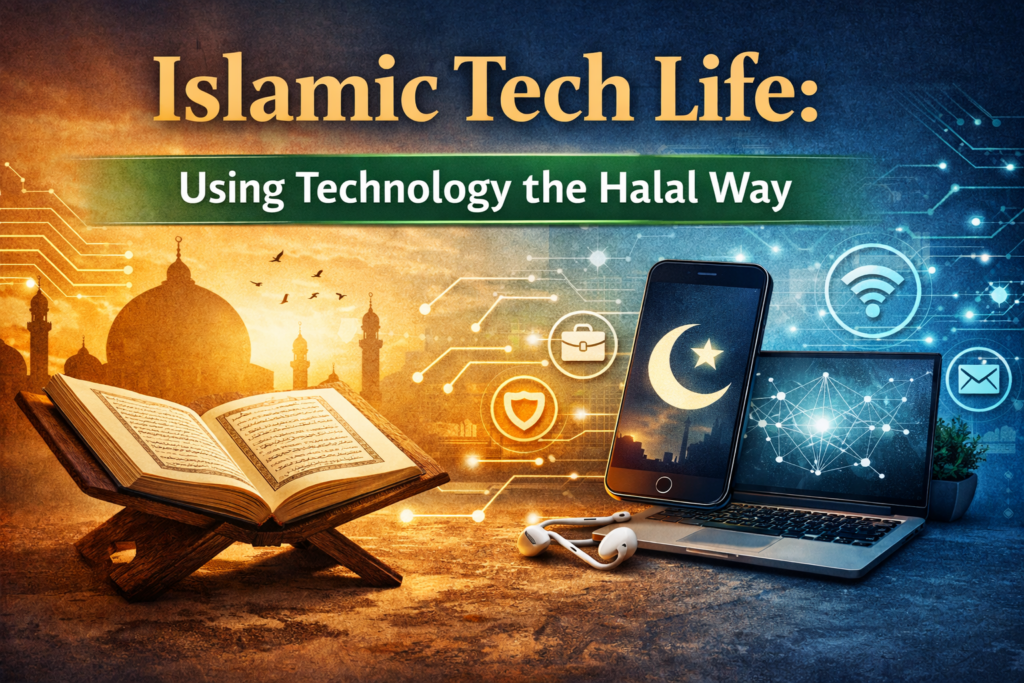
Islamic Tech Life is about using modern technology in a halal, responsible, and balanced way — without compromising Islamic values, spiritual growth, or moral integrity. It encourages Muslims to benefit from digital tools while remaining conscious of their accountability before Allah.
For Muslims, the question is not whether technology should be used — but how it should be used wisely, responsibly, and purposefully.
In this guide, you’ll learn:
Whether technology is a blessing or a test in Islam
What Islamic Tech Life really means
Core Islamic principles for digital behavior
Halal boundaries in online spaces
Whether working in technology is permissible
How to build a balanced digital lifestyle
Why Islamic Tech Life exists
Practical FAQs for Muslims navigating the digital age
Let’s explore how faith and technology can coexist in a healthy and meaningful way.
Table of Contents
🧠 Is Technology a Blessing or a Test in Islam?
In Islam, every blessing comes with responsibility. Wealth, health, knowledge, and time are all gifts from Allah — and we are accountable for how we use them. Technology is no different. It is neither inherently good nor bad; it becomes beneficial or harmful depending on how it is used.
Allah ﷻ says in the Qur’an:
“Then you will surely be asked that Day about the blessings.” (Qur’an 102:8)
Technology becomes a blessing when it:
Helps Muslims earn halal income
Saves time and effort through automation
Spreads beneficial knowledge and Islamic education
Strengthens family ties through communication
Supports dawah, charity, and community work
Enables access to learning resources and opportunities
Technology becomes a test when it:
Encourages addiction and endless scrolling
Distracts from salah, family, and responsibilities
Exposes users to haram content and unethical behavior
Promotes arrogance, envy, and comparison culture
Wastes valuable time without benefit
Normalizes immodesty or harmful ideologies
Islam teaches moderation and awareness. Technology should serve humanity — not enslave it. A Muslim approaches technology with conscious discipline rather than blind consumption.
📌 What Does Islamic Tech Life Mean?
Islamic Tech Life is a conscious lifestyle approach where Muslims use technology while staying aligned with Islamic ethics, spiritual values, and moral boundaries.
It does not reject innovation, modern tools, or digital progress. Instead, it emphasizes:
✔️ Correct intention (niyyah)
✔️ Balance (wasatiyyah)
✔️ Halal boundaries
✔️ Accountability before Allah
✔️ Purpose-driven usage
✔️ Ethical digital conduct
The Prophet Muhammad ﷺ said:
“Actions are judged by intentions.” (Bukhari & Muslim)
This applies to every app we open, every message we send, every video we watch, and every digital product we create.
A Muslim using technology should ask:
Is this beneficial or harmful?
Does this strengthen or weaken my imaan?
Does this bring me closer to Allah or distract me?
Does this align with Islamic ethics?
Islamic Tech Life encourages intentional digital behavior instead of passive consumption.
🕌 Core Islamic Principles for Using Technology
Let’s explore the foundational Islamic principles that guide ethical technology use.
1️⃣ Correct Intention (Niyyah)
Before using any digital tool, ask yourself:
Why am I using this device or platform?
Is this activity beneficial or productive?
Will this please Allah or displease Him?
A simple intention can transform ordinary activities into acts of worship. Examples:
Learning new skills online to support your family
Studying Islamic knowledge through digital courses
Using productivity tools to manage time efficiently
Creating beneficial content for others
Running an ethical online business
When intention is pure, technology becomes a means of reward instead of distraction.
2️⃣ Accountability in the Digital World
Many people behave differently online because they feel anonymous or hidden. Islam teaches that nothing is hidden from Allah.
Allah ﷻ says:
“Not a word does a person utter except that there is an observer ready.” (Qur’an 50:18)
Online accountability includes:
What we post on social media
What content we consume
What opinions we spread
How we treat people digitally
What businesses we support
How we handle privacy and honesty
Cyber bullying, fake news, piracy, harassment, scams, and spreading immorality are serious ethical violations in Islam.
Digital actions carry real consequences — both worldly and spiritual.
3️⃣ Time Is an Amanah (Trust)
Time is one of the greatest blessings and one of the most wasted resources in the digital age.
The Prophet ﷺ said:
“There are two blessings which many people waste: health and free time.” (Bukhari)
Excessive screen time leads to:
Missed prayers
Reduced focus
Mental fatigue
Weak family relationships
Loss of productivity
Spiritual laziness
Islam encourages intentional use of time. Muslims should schedule technology instead of allowing technology to control their schedule.
4️⃣ Halal and Haram in Digital Spaces
Not everything online is permissible. Muslims must maintain halal boundaries even in virtual environments.
Clearly haram digital activities include:
Online gambling and betting platforms
Interest-based financial services
Pornographic and immoral content
Scams, fraud, phishing, and hacking
Spreading false information
Piracy and copyright violations
Exploiting others digitally
Halal digital practices include:
Ethical online businesses
Educational platforms
Islamic content creation
Halal investments
Freelancing and remote jobs
Community building and charity work
Technology must remain within Islamic ethical boundaries.
🌱 Spiritual Discipline in the Digital Age
One of the biggest challenges Muslims face today is maintaining spiritual consistency while living in a constantly connected digital world. Notifications, social media feeds, entertainment platforms, and online work environments often compete for our attention throughout the day. Without conscious discipline, technology can slowly weaken spiritual focus.
Islam teaches intentional living. The heart must remain connected to Allah regardless of environment or tools. Technology should never replace spiritual routines such as daily prayers, Quran recitation, remembrance (dhikr), and family bonding.
Practical ways to strengthen spiritual discipline digitally include:
📵 Turning off non-essential notifications during prayer times
⏰ Using prayer reminder apps instead of distracting alarms
📖 Subscribing to beneficial Islamic learning channels
🎧 Listening to Quran or lectures during commuting time
🧠 Avoiding late-night screen usage that affects Fajr prayer
🛑 Blocking harmful or addictive websites
Digital self-control is a form of jihad against the nafs. When Muslims intentionally shape their digital environment, technology becomes a tool for spiritual growth instead of spiritual erosion.
A disciplined digital lifestyle protects the heart from distraction and strengthens long-term imaan.
💼 Is Working in Technology Halal?
Many Muslims ask whether careers in software development, IT, AI, digital marketing, cloud computing, or online businesses are halal.
In general, working in technology is halal if:
The core business is permissible
Income is earned honestly
The work does not promote haram activities
No unethical harm is caused
Contracts and dealings are transparent
Islam encourages excellence (ihsaan), skill development, innovation, and contributing positively to society.
Examples of halal tech work:
Software engineering for ethical businesses
Web development for halal companies
Cybersecurity and cloud infrastructure
Education platforms
Healthcare technology
Islamic finance technology
AI used for beneficial purposes
If a company directly supports gambling, pornography, interest-based exploitation, or unethical surveillance, Muslims should avoid such employment.
Use built-in phone controls to limit social media and entertainment apps.
✅ Protect Prayer Time
Silence notifications during salah and family worship.
✅ Digital Fasting
Occasionally disconnect from devices to refresh your mind and soul.
✅ Use Technology for Ibadah
Use Quran apps, prayer reminders, Islamic lectures, and charity platforms.
✅ Curate Your Content
Unfollow harmful content and follow beneficial creators.
✅ Family Digital Rules
Establish device-free family times to strengthen relationships.
✅ Maintain Physical Health
Balance screen time with exercise, sunlight, and sleep.
Technology should support life — not dominate it.
🧑👩👧 Family, Children, and Digital Responsibility
Technology affects not only individuals but entire families. Children today are exposed to screens from a very young age, which can shape their behavior, learning patterns, and emotional development. Parents carry the responsibility of guiding children toward healthy digital habits rooted in Islamic values.
Islam encourages guardianship, protection, and moral upbringing. Digital parenting should include both boundaries and education rather than strict restriction alone.
Practical digital parenting strategies:
👨👩👧 Establish screen-time limits for children
🔐 Use parental control tools and content filters
📚 Encourage offline learning and reading habits
🕌 Teach children Islamic manners online and offline
🤝 Monitor social media interactions respectfully
🌿 Promote outdoor activities and family bonding
💬 Discuss online dangers openly and honestly
Parents should also lead by example. Children learn digital behavior from observing adults. A household that values moderation, prayer, respect, and responsibility naturally builds healthy digital citizens.
Family-centered digital discipline strengthens trust, emotional connection, and Islamic character development.
🤖 Artificial Intelligence, Automation, and the Muslim Future
Artificial intelligence, automation, and smart technologies are rapidly transforming how societies operate. From healthcare and finance to education and transportation, intelligent systems influence daily decision-making. Muslims must actively engage with these developments rather than remain passive consumers.
Islam encourages learning, innovation, and ethical leadership. Muslims should aim to participate in building responsible technology that serves humanity with justice, transparency, and compassion.
Ethical considerations for Muslims in AI and automation include:
⚖️ Avoiding bias, discrimination, and injustice in algorithms
🔐 Protecting user privacy and data security
💼 Preventing job exploitation and unethical automation
🧭 Ensuring transparency and accountability
🌍 Using technology for social benefit and sustainability
📚 Promoting educational accessibility
Muslims involved in technology development carry moral responsibility to influence how tools shape society. Ethical design is an act of worship when aligned with justice and public benefit.
Rather than fearing technological change, Muslims should become leaders who shape technology with wisdom and faith.
🌐 Why Islamic Tech Life Exists
Islamic Tech Life exists to guide Muslims in navigating the digital world confidently, ethically, and spiritually.
Its goals include:
Educating Muslims about halal technology usage
Promoting ethical digital careers
Addressing modern digital challenges
Encouraging balance and mindfulness
Protecting faith in the digital age
Supporting productivity and purpose
Creating long-term benefit and sadaqah jariyah
The platform aims to educate without fear, guide without extremism, and promote conscious digital living rooted in Islamic values.
❓ Frequently Asked Questions About Islamic Tech Life
❓ Is technology halal in Islam?
Technology itself is halal. It becomes halal or haram based on how it is used, the intention behind its use, and whether it violates Islamic principles.
❓ What is Islamic Tech Life?
Islamic Tech Life is a mindful lifestyle approach where Muslims use modern technology ethically while maintaining spiritual discipline, moral boundaries, and accountability.
❓ Can Muslims use social media?
Yes, social media can be used responsibly for learning, business, dawah, and communication — as long as it avoids haram content, immodesty, misinformation, and time wastage.
❓ Is earning money online halal?
Earning money online is halal if the business or service itself is halal, transparent, and free from deception, interest, and exploitation.
❓ How can parents protect children from harmful digital content?
Parents should use parental controls, educate children about online ethics, limit screen time, encourage offline activities, and model healthy digital behavior.
🤲 Final Thoughts on Islamic Tech Life
Technology will continue to evolve rapidly. Artificial intelligence, automation, digital economies, and online communities will shape the future of humanity.
However, our responsibility remains the same:
Use technology with intention
Maintain balance
Protect faith
Respect halal boundaries
Remain accountable before Allah
When guided by Islamic principles, technology can become a source of productivity, knowledge, dawah, and barakah instead of distraction and harm.
May Allah guide us to use modern tools in ways that please Him, protect our hearts, and benefit humanity.