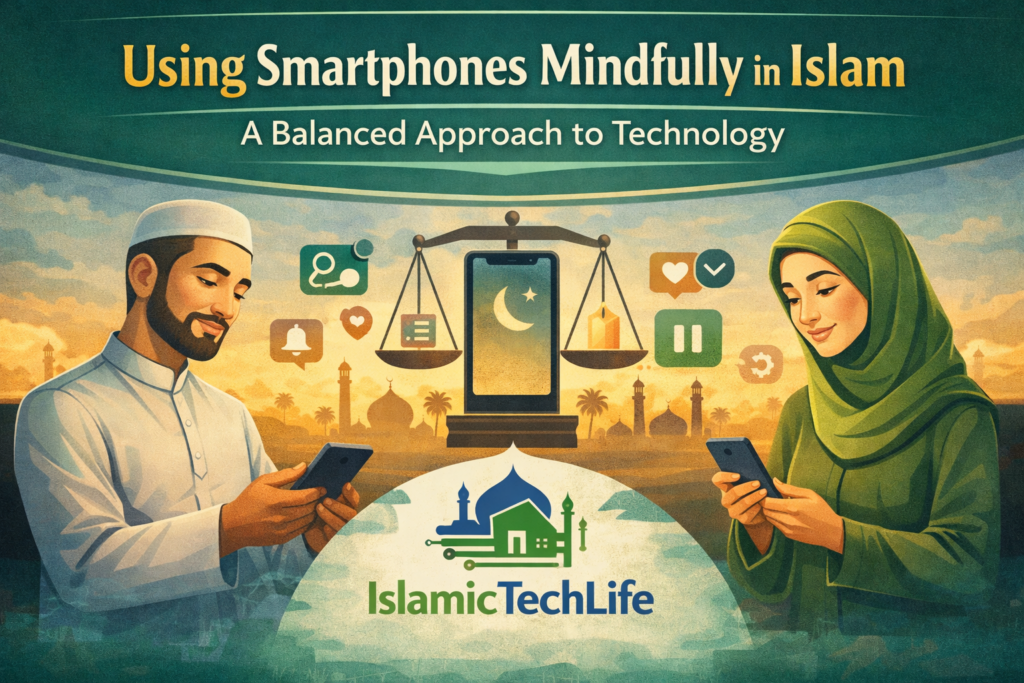
πŸ“Using Smartphones Mindfully in Islam: A Balanced Approach to Technology

Introduction

Using Smartphones Mindfully in Islam is essential in today’s digital age, where constant connectivity can easily distract Muslims from their faith, responsibilities, and personal well-being.Smartphones have become an inseparable part of modern life. From communication and education to work, banking, and even religious learning, these devices influence how we live every day. For Muslims, however, the question is not only how to use smartphonesβ€”but how mindfully they should be used in accordance with Islamic values.

Islam does not reject technology. Instead, it teaches moderation, intention, and accountability. A smartphone can be a tool for knowledge, productivity, and even worshipβ€”but it can also become a source of distraction, wasted time, and spiritual decline if used without awareness.

This article explores how Muslims can use smartphones mindfully, balancing modern digital needs with Islamic principles, while maintaining productivity, mental well-being, and spiritual focus.


Practicing Using Smartphones Mindfully in Islam helps Muslims avoid digital distractions while maintaining discipline, productivity, and spiritual focus.

Using Smartphones Mindfully in Islam

Understanding Mindfulness from an Islamic Perspective

Mindfulness in Islam is closely connected to taqwa (God-consciousness) and muhasabah (self-accountability). Being mindful means being aware of our actions, intentions, and their consequencesβ€”both in this world and the hereafter.

When applied to smartphone usage, mindfulness involves:

  • Awareness of time spent on the device
  • Conscious choice of content consumed
  • Control over habits and distractions
  • Aligning digital behavior with Islamic ethics

Islam encourages balance, not extremism. Completely abandoning smartphones is neither practical nor necessary. Instead, Muslims are encouraged to use technology with purpose.


🧭 Why Using Smartphones Mindfully in Islam Has Become Essential Today

Modern smartphones are designed to capture attention continuously through notifications, endless feeds, and algorithm-driven content. Without awareness, users can easily lose hours scrolling, switching apps, and consuming content with little real benefit. For Muslims, this creates a serious challenge because time, focus, and intention are sacred trusts.

Using Smartphones Mindfully in Islam helps believers regain control over attention, habits, and spiritual priorities. Instead of reacting impulsively to every alert or update, mindfulness encourages intentional usage aligned with faith and responsibility.

Many Muslims today struggle with balancing productivity, worship, family life, and digital demands. By consciously practicing Using Smartphones Mindfully in Islam, individuals can reduce distractions, protect mental clarity, and strengthen self-discipline. Mindful usage transforms smartphones from sources of stress into tools of benefit.

When technology supports values rather than replacing them, spiritual stability and emotional balance naturally improve.


Smartphones as a Blessing When Used Correctly

When used mindfully, smartphones can be a powerful blessing.

Positive Uses of Smartphones for Muslims

  • Access to Quran apps and tafsir
  • Prayer time reminders and Qibla direction
  • Online Islamic classes and lectures
  • Educational and career development resources
  • Staying connected with family and community
  • Managing halal businesses and online work

These uses align with the Islamic principle of beneficial knowledge (Ilm Naf’e) and productive living.


The Hidden Dangers of Uncontrolled Smartphone Use

Despite their benefits, smartphones can easily become harmful when used excessively or without boundaries.

Common Issues Faced by Muslims Today

  • Endless scrolling and time wastage
  • Addiction to social media validation
  • Exposure to inappropriate or harmful content
  • Reduced concentration in salah and ibadah
  • Neglect of family, health, and responsibilities
  • Sleep disruption and mental fatigue

Islam warns against israf (excess) and wasting timeβ€”both of which are common outcomes of unmanaged smartphone use.


Time as an Amanah (Trust)

In Islam, time is a trust given by Allah. Every moment spent will be accounted for.

Using smartphones mindfully means asking:

  • Is this activity beneficial?
  • Is it necessary right now?
  • Is it affecting my salah, sleep, or responsibilities?

Simple awareness can drastically reduce unnecessary usage.


⏳ How Using Smartphones Mindfully in Islam Protects Barakah in Time

Barakah in time refers to achieving meaningful outcomes within limited hours. Many people feel constantly busy yet unproductive because attention is fragmented across digital platforms. Uncontrolled phone usage drains energy, focus, and spiritual awareness.

Practicing Using Smartphones Mindfully in Islam helps Muslims protect barakah by intentionally choosing when and how devices are used. Scheduling focused work sessions, limiting notifications, and reducing unnecessary screen exposure allow deeper concentration and improved quality of effort.

Mindful phone usage also prevents time leakage during critical moments such as prayer preparation, family interaction, and personal reflection. When Muslims prioritize purpose over impulse, productivity increases while stress decreases.

Over time, consistent application of Using Smartphones Mindfully in Islam builds stronger habits, healthier routines, and improved emotional stability. Small daily improvements compound into long-term personal growth.


Practical Ways to Use Smartphones Mindfully in Islam

1. Set Clear Intentions (Niyyah)

Before unlocking your phone, pause briefly and ask:

  • Why am I using this right now?
  • Is it for benefit or habit?

Using smartphones with intention transforms them from distractions into tools.


2. Control Screen Time Without Guilt

Islam promotes moderation, not guilt.

Practical steps:

  • Use built-in screen time limits
  • Allocate specific times for social media
  • Avoid phone use during salah, meals, and family time

Discipline creates freedom, not restriction.


3. Protect the Eyes and Heart

What we see affects what we feel.

Mindful smartphone use includes:

  • Avoiding inappropriate visuals
  • Unfollowing harmful or toxic accounts
  • Choosing content that uplifts, educates, or benefits

This aligns with Islamic teachings on guarding one’s gaze and heart.


4. Smartphones and Salah Focus

One of the biggest challenges today is distraction in prayer.

Helpful practices:

  • Put phone on silent before salah
  • Keep it out of sight during prayer
  • Avoid scrolling immediately before praying

Small changes can greatly improve khushu (concentration).


5. Digital Minimalism from an Islamic Lens

Digital minimalism means using technology intentionally rather than compulsively.

Islamic digital minimalism includes:

  • Fewer apps, more purpose
  • Less consumption, more creation
  • Silence over noise
  • Quality over quantity

This approach supports mental clarity and spiritual growth.


Smartphones, Mental Health, and Islam

Excessive smartphone use is linked to:

  • Anxiety
  • Comparison culture
  • Reduced self-esteem
  • Sleep disorders

Islam encourages mental balance through:

  • Regular prayer
  • Reflection
  • Gratitude
  • Community interaction

Mindful smartphone use complements these practices rather than replacing them.


🧠 Digital Overstimulation, Dopamine Cycles, and Self-Control

Smartphone apps are engineered to stimulate dopamine through likes, notifications, and continuous novelty. While this increases engagement, it can also create dependency, reduced attention span, and emotional imbalance. Islam encourages mastery over desires and disciplined self-control.

Using Smartphones Mindfully in Islam breaks addictive cycles by restoring conscious choice. Reducing unnecessary notifications, limiting social media exposure, and creating screen-free zones in daily life improves emotional regulation and mental clarity.

Islamic practices such as prayer, remembrance, gratitude, and reflection naturally support emotional balance. When smartphone usage aligns with these practices instead of replacing them, overall mental well-being improves significantly.

By consistently practicing Using Smartphones Mindfully in Islam, Muslims develop resilience against digital addiction and regain authority over attention and behavior.


Teaching Children and Families Mindful Phone Usage

Parents play a key role in setting digital habits.

Islamic guidance for families:

  • Set device-free times at home
  • Encourage offline play and learning
  • Be role models in phone usage
  • Discuss ethics, not just rules

Children learn more from observation than instruction.


Using Smartphones as a Tool for Good Deeds

A mindful Muslim uses smartphones to increase good deeds, such as:

  • Sharing beneficial reminders
  • Learning new skills
  • Helping others through digital platforms
  • Supporting halal online initiatives

Technology can be a form of sadaqah jariyah when used correctly.


Balance Between Dunya and Akhirah

Islam teaches balanceβ€”not withdrawal from the world.

Using smartphones mindfully allows Muslims to:

  • Stay productive in dunya
  • Stay conscious of akhirah
  • Avoid extremes of addiction or rejection

The goal is control, not elimination.


🌍 Community Influence and Setting Positive Digital Examples

Personal digital behavior influences families, friends, and communities. Children observe adult habits closely and often mirror digital behaviors unconsciously. Practicing Using Smartphones Mindfully in Islam helps establish healthy norms within households and social circles.

When adults demonstrate balanced phone usage, respectful online behavior, and disciplined screen habits, younger generations naturally adopt similar patterns. Community-level awareness also reduces normalization of addiction and excessive digital dependence.

Mindful smartphone usage strengthens interpersonal communication, emotional presence, and spiritual atmosphere within families and communities. Over time, practicing Using Smartphones Mindfully in Islam contributes to healthier relationships, stronger focus, and improved collective discipline.


πŸŒ™ Spiritual Presence, Reflection, and Digital Intentionality

One of the greatest benefits of Using Smartphones Mindfully in Islam is the ability to preserve spiritual presence in daily life. Constant digital noise often reduces moments of reflection, gratitude, and remembrance. Notifications interrupt quiet thinking, while endless feeds occupy mental space that could otherwise be used for spiritual awareness.

Intentional smartphone usage creates room for mindfulness, reflection, and conscious living. Simple habits such as keeping the phone away during quiet moments, avoiding unnecessary multitasking, and scheduling short digital breaks allow the heart and mind to reset. This supports deeper focus in prayer, improved emotional balance, and stronger self-awareness.

Islam encourages reflection on actions, time, and purpose. When Muslims practice Using Smartphones Mindfully in Islam, they naturally become more aware of how small habits shape long-term character. Choosing purposeful engagement over impulsive consumption strengthens discipline and self-control.

Digital intentionality also improves gratitude. Instead of constantly comparing lifestyles or chasing virtual validation, mindful users appreciate real-life blessings, relationships, and opportunities. Over time, Using Smartphones Mindfully in Islam cultivates calmness, clarity, and contentment β€” allowing technology to remain a servant rather than a master.


Final Thoughts: Mindful Use Over Mindless Consumption

Smartphones are neither inherently good nor bad. Their impact depends on how and why they are used.

By applying Islamic principles such as intention, moderation, accountability, and self-discipline, Muslims can turn smartphones into tools of benefit rather than sources of distraction.

Mindful smartphone use is not about perfectionβ€”it is about awareness.

When technology serves your values instead of controlling them, it becomes a blessing rather than a burden.

Islamic guidance on moderation

accountability of time in Islam

By practicing Using Smartphones Mindfully in Islam, Muslims can stay productive, protect their faith, and maintain balance between dunya and akhirah.

Halal content creation for Muslims


Halal digital lifestyle for Muslims


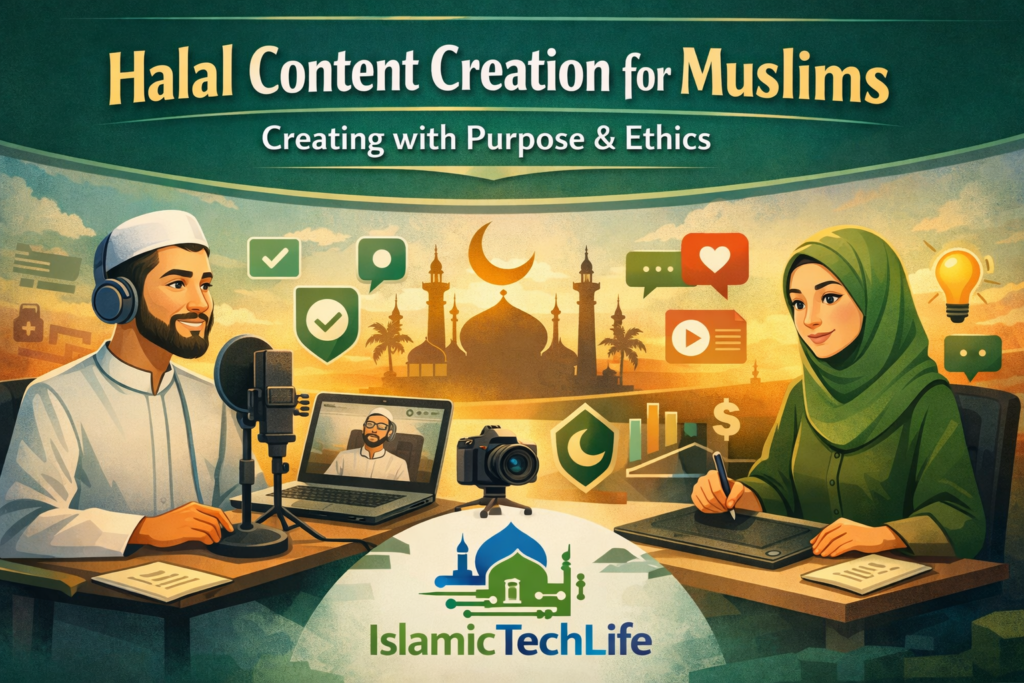
πŸ“Halal Content Creation for Muslims: Creating with Purpose and Ethics in the Digital Age

In today’s digital world, halal content creation for Muslims has become one of the most powerful ways to influence minds, share knowledge, build communities, and earn halal income. From blogs and YouTube channels to podcasts, social media platforms, newsletters, and AI-assisted tools, Muslims are actively participating in the creator economy like never before.

However, with this opportunity comes responsibility.

Building a sustainable halal content creation for Muslims strategy requires sincerity, discipline, and ethical consistency.

Halal content creation for Muslims is not just about views, followers, or monetization. It is an amanah (trust). Every word written, image shared, video uploaded, and idea promoted will be questioned. Islam teaches accountability for influence, speech, and intention.

This comprehensive guide explains how Muslims can create content with sincerity (niyyah), ethical responsibility, professional excellence, and long-term impact β€” while remaining aligned with Islamic values in a fast-moving digital ecosystem.

Whether you run a blog like IslamicTechLife, a YouTube channel, a podcast, or a social media brand, this article will help you build a halal content strategy that benefits both dunya and akhirah.

🌍 Why Halal Content Creation for Muslims Matters in the Digital Age

Digital platforms shape opinions, behavior, culture, and values. Algorithms amplify voices rapidly, making content creators powerful influencers β€” whether intentionally or not.

For Muslims, this influence comes with moral responsibility.

Content can:

  • πŸ“ˆ Educate or mislead
  • 🌱 Inspire or corrupt
  • 🀝 Unite or divide
  • 🧠 Strengthen or weaken faith
  • πŸ’Ό Generate halal income or doubtful earnings

Halal content creation for Muslims ensures that influence remains ethical, truthful, beneficial, and spiritually safe. It protects both the creator and the audience from harmful impact.

Halal Content Creation for Muslims

Table of Contents


🧠 What Is Halal Content Creation?

Halal content creation refers to producing digital content that:

  • βœ”οΈ Complies with Islamic principles
  • βœ”οΈ Avoids haram and doubtful elements
  • βœ”οΈ Promotes truth, benefit, and responsibility
  • βœ”οΈ Respects human dignity and modesty
  • βœ”οΈ Maintains honesty and transparency
  • βœ”οΈ Seeks positive impact

Halal content is not limited to religious topics. Muslims can create content about:

  • Technology
  • Education
  • Business
  • Fitness
  • Productivity
  • Design
  • Marketing
  • Lifestyle

As long as both the content and the process remain halal, the work is permissible and rewarding.


πŸ•Œ The Islamic Foundation of Content Creation

Islam places great emphasis on speech, intention, and accountability.

1️⃣ Intention (Niyyah)

The Prophet ο·Ί said:

β€œActions are judged by intentions.”

Before creating content, ask:

  • Am I benefiting people?
  • Am I spreading truth or confusion?
  • Is this pleasing to Allah?
  • Am I chasing ego or serving purpose?

Even monetized content can be halal when intention remains sincere and ethical standards are maintained.

2️⃣ Accountability for Words and Influence

Islam teaches that every word carries weight. Digital content lasts long and spreads fast.

Creators must avoid:

  • Misinformation
  • Harmful trends
  • Sensationalism
  • Exploitation
  • Manipulation

Influence must be handled with responsibility.


βš–οΈ Core Principles of Halal Content Creation

Every successful halal content creation for Muslims model begins with truthfulness, accountability, and beneficial intention.

1️⃣ Truthfulness and Authenticity

Islam strictly prohibits lying, exaggeration, and deception.

Avoid:

  • Fake clickbait titles
  • False promises
  • Misleading thumbnails
  • Plagiarized content
  • AI output without verification

Best practice: Always verify sources and remain transparent.

2️⃣ Avoiding Haram and Doubtful Content

Stay away from:

  • Pornographic or suggestive imagery
  • Profanity and abusive language
  • Promotion of alcohol, gambling, drugs
  • Deceptive marketing
  • Exploitative sponsorships

When doubtful, choose caution (taqwa).

3️⃣ Respecting Modesty (Haya)

Modesty applies to:

  • Visual presentation
  • Language
  • Body exposure
  • Thumbnails and captions
  • Tone and attitude

Engagement never requires compromising dignity.

4️⃣ Beneficial Knowledge (Ilm Naf’e)

Ask:

  • Does this help someone?
  • Does this solve a real problem?
  • Does it encourage goodness?

Content should uplift, educate, or improve lives.


🧠 Digital Influence, Responsibility, and Accountability in Islam

In the digital age, content creators carry enormous influence. A single post can reach thousands or even millions of people within hours. This power requires responsibility, wisdom, and accountability. Islam teaches that influence is a trust, and every individual will be questioned about how they used it.

Words have lasting impact. Once something is published online, it can be shared, copied, and preserved for years. Even deleted content can resurface. This permanence means creators must carefully consider the consequences of what they publish. Harmful ideas, misinformation, or immoral imagery can continue affecting others long after the original creator has moved on.

Islam encourages Muslims to use influence for good, promoting justice, honesty, compassion, and beneficial knowledge. A halal content creator should always evaluate whether content builds or damages character, strengthens or weakens faith, and benefits or harms society.

Responsible influence includes correcting mistakes publicly, acknowledging sources honestly, and avoiding sensationalism for short-term growth. Accountability protects both the creator and the audience from long-term harm.


πŸ–₯️ Halal Content Creation Across Platforms

✍️ Blogging (Like IslamicTechLife)

Ideal for:

  • Educational guides
  • Ethical tech insights
  • Long-form tutorials
  • SEO-driven learning
  • Sustainable traffic

Best practices:

  • Original writing
  • Proper citations
  • Avoid AI plagiarism
  • Ethical SEO practices

πŸŽ₯ YouTube & Video Content

Halal video strategies:

  • Faceless educational videos
  • Screen recordings
  • Animation explainers
  • Voice narration
  • Clean visuals

Avoid questionable thumbnails and background elements.

πŸ“± Social Media Content

Key principles:

  • Avoid vanity obsession
  • Avoid trend chasing
  • Maintain respectful tone
  • Provide value consistently
  • Protect privacy

πŸ’° Halal Monetization: Earning Without Compromise

Ethical monetization strengthens the long-term sustainability of halal content creation for Muslims.

Yes β€” halal content creation for Muslims can generate halal income.

βœ… Halal Monetization Methods

  • Ethical ad networks
  • Halal affiliate products
  • Courses and ebooks
  • Consulting services
  • Membership communities
  • Donations

❌ What to Avoid

  • Haram advertisements
  • Fake reviews
  • Manipulative funnels
  • Clickbait deception
  • Questionable sponsors

Integrity brings barakah.


πŸ“Š Financial Transparency, Trust, and Audience Responsibility

Trust is the foundation of sustainable content creation. Audiences follow creators because they believe in their honesty, authenticity, and integrity. Islam strongly emphasizes fair dealing, transparency, and avoiding deception in financial matters.

Halal content creators must clearly disclose sponsorships, affiliate links, and paid partnerships. Hiding financial relationships damages trust and may lead to misleading audiences. Transparency protects both legal compliance and Islamic ethics.

Creators should carefully review advertising networks and partners to ensure that promoted products and services align with halal values. Even indirect promotion of harmful products can negatively affect credibility and spiritual accountability.

Pricing digital products fairly, delivering promised value, honoring refunds, and maintaining professional communication are part of Islamic business ethics. Long-term trust generates sustainable growth and barakah in income.


πŸ€– The Role of Technology and AI in Halal Content Creation

AI tools are halal when used ethically.

Permissible uses:

  • Idea generation
  • Editing assistance
  • Grammar improvement
  • Research summarization
  • Visual design (within halal limits)

Avoid:

  • Deepfakes
  • Plagiarism
  • Fake authority
  • Manipulative automation

Human responsibility remains essential.


πŸ” Content Accuracy, Research Ethics, and Information Verification

The internet contains massive amounts of information, but not all of it is reliable. Misinformation spreads rapidly, especially when content creators prioritize speed over accuracy. Islam encourages verification, caution, and honesty when sharing knowledge.

Before publishing any claim, creators should verify sources, cross-check facts, and consult authentic references. Quoting unreliable sources or spreading unverified claims can mislead audiences and damage credibility.

Using AI tools for research assistance should never replace human responsibility. AI-generated content may contain errors, bias, or fabricated data. Creators must review, correct, and validate all AI output before publishing.

Proper citation, respecting copyright laws, and avoiding plagiarism demonstrate ethical professionalism. Accuracy builds trust and protects both spiritual accountability and audience confidence.


⚠️ Challenges Muslim Content Creators Face

Common challenges:

  • Algorithm bias
  • Ethical pressure
  • Monetization restrictions
  • Public criticism
  • Cultural misunderstanding

Solution: Consistency, patience, integrity.


🌱 Content Creation as Dawah (Without Preaching)

Dawah can be subtle:

  • Professionalism
  • Ethics
  • Respect
  • Consistency
  • Honesty

Actions often speak louder than words.


🌐 Building Audience Trust Through Consistency and Integrity

Trust is the foundation of every successful content creator. Audiences follow creators not only for information, but for reliability, honesty, and authenticity. In Islam, trustworthiness (amanah) is a core value that applies equally to digital work.

Consistency builds credibility. Publishing regularly, maintaining quality standards, and staying aligned with ethical values create long-term audience loyalty. Sudden changes in tone, misleading promotions, or inconsistent messaging weaken trust and damage reputation.

Integrity means staying honest even when shortcuts appear tempting. Avoid exaggerating achievements, manipulating analytics, copying others’ work, or using deceptive marketing strategies. Growth achieved through unethical practices rarely lasts and often leads to loss of credibility and spiritual accountability.

Engaging respectfully with audiences, responding thoughtfully to feedback, and acknowledging mistakes openly strengthen authenticity. Trust compounds over time and becomes one of the most valuable assets for a halal content brand.


πŸ—οΈ Building a Halal Content Brand

A strong halal brand is built on:

  • Trust
  • Value
  • Consistency
  • Ethics
  • Transparency

Long-term reputation beats viral success.


🌍 Community Impact, Representation, and Long-Term Legacy

Muslim content creators represent Islam whether they intend to or not. Audiences often associate behavior, ethics, professionalism, and communication style with broader religious identity. This responsibility requires patience, humility, and wisdom.

Positive representation helps reduce stereotypes, promote understanding, and build bridges between communities. Even non-religious content created ethically reflects Islamic values through conduct and character.

Creators should consider long-term legacy rather than temporary popularity. Content that teaches, inspires, or solves problems continues benefiting people long after publication. This ongoing benefit becomes a form of sadaqah jariyah when intention is sincere.

Building a positive digital legacy requires consistency, sincerity, continuous learning, and adaptability. The goal is not only to grow metrics but to leave meaningful impact that benefits society and pleases Allah.


🧩 Continuous Learning, Skill Development, and Creative Excellence

Halal content creation is not only about avoiding harm but also about striving for excellence (ihsaan). Improving writing skills, communication clarity, design quality, storytelling ability, and technical knowledge helps creators deliver greater value to their audience.

Continuous learning allows creators to stay updated with platform changes, algorithm shifts, ethical guidelines, and emerging technologies. Investing time in learning improves efficiency and creativity while maintaining professional standards.

Creative excellence includes thoughtful research, clear structure, engaging presentation, and consistent branding. High-quality work reflects sincerity and respect for the audience’s time and attention.

By continuously refining skills and improving content quality, Muslim creators can compete professionally while remaining ethically grounded.


πŸ”„ Patience, Consistency, and Long-Term Vision in Content Creation

Meaningful growth in content creation rarely happens overnight. Algorithms change, audience trust takes time to build, and ethical creators often grow slower than sensational channels. Islam teaches patience (sabr), consistency, and long-term vision as keys to success.

Muslim creators should avoid comparing themselves with others or chasing quick fame. Sustainable impact comes from showing up regularly, improving skills gradually, and maintaining ethical boundaries even during slow growth phases. Small but consistent effort compounds into lasting results.

Long-term vision allows creators to focus on meaningful contribution rather than temporary popularity. When sincerity guides effort, success arrives in ways that bring peace, stability, and barakah rather than stress and compromise.


🌟 Final Thoughts: Creating for the Akhirah and the Algorithm

Create with:

  • Purpose over popularity
  • Integrity over income
  • Impact over impressions

If your content benefits even one person, it is success.

May Allah place barakah in your efforts and make your work sadaqah jariyah.
Ameen 🀲


By practicing halal content creation for Muslims, creators protect both their audience and their spiritual accountability.

  • Practical guidance on responsible digital behavior and digital citizenship is also available from
    Common Sense Media, which focuses on ethical technology use and online responsibility.
  • Academic perspectives on ethical media responsibility are discussed in depth by the
    Stanford Encyclopedia of Philosophy, highlighting the importance of truth and accountability in content creation.

πŸŒ™ Halal Digital Lifestyle for Muslims: How to Use Technology with Balance, Ethics, and Faith

Living in a digital world is unavoidable today. Smartphones, social media platforms, artificial intelligence tools, remote work systems, and constant internet connectivity have become part of everyday life. From communication and learning to business and entertainment, technology influences nearly every aspect of modern living.

For Muslims, this raises an important concern:

πŸ‘‰ How can we maintain a halal digital lifestyle while using modern technology?

A halal digital lifestyle for Muslims does not mean rejecting technology or isolating oneself from progress. Instead, it means using digital tools with intention, moderation, responsibility, and strong Islamic values. Islam encourages balance, discipline, and conscious decision-making in every area of life β€” including how we engage with technology.

Many believers today are actively searching for ways to build a halal digital lifestyle for Muslims that supports faith while embracing modern technology.

This guide explains what a halal digital lifestyle means, why it matters, and how Muslims can build a healthy, faith-centered relationship with digital tools.

Halal digital lifestyle for Muslims


🧠 What Is a Halal Digital Lifestyle for Muslims?

Understanding what a halal digital lifestyle for Muslims truly means helps clarify how technology can be used responsibly.

A halal digital lifestyle for Muslims means using technology in ways that are ethical, beneficial, and aligned with Islamic teachings. It focuses on conscious usage rather than uncontrolled consumption.

A halal digital lifestyle includes:

  • βœ”οΈ Consuming halal and beneficial content
  • βœ”οΈ Avoiding haram and harmful digital activities
  • βœ”οΈ Managing screen time responsibly
  • βœ”οΈ Protecting prayer and family commitments
  • βœ”οΈ Using technology to support learning, work, and worship
  • βœ”οΈ Maintaining modesty and respectful behavior online
  • βœ”οΈ Avoiding addiction and distraction

Technology itself is neutral. Islam focuses on how and why something is used rather than its existence. A smartphone can be a source of knowledge or a source of distraction β€” the difference lies in the user’s choices.

A halal digital lifestyle promotes intentional living rather than passive scrolling.


πŸ•Œ Why a Halal Digital Lifestyle Matters

Digital habits shape thoughts, behavior, productivity, and emotional well-being. Without awareness, technology can slowly dominate daily routines and weaken spiritual discipline.

Common negative impacts of careless digital usage include:

  • πŸ“‰ Reduced focus in prayer
  • 🏠 Weak family interaction
  • 😴 Poor sleep quality
  • 🧠 Mental fatigue and anxiety
  • ⏳ Loss of productive time
  • πŸ’” Exposure to harmful content

Islam teaches moderation in all aspects of life. A halal digital lifestyle protects imaan while still allowing Muslims to benefit from innovation, education, and global connectivity.

When technology is managed consciously, it enhances life instead of controlling it.


🌿 Mental Health, Mindfulness, and Digital Well-Being

Constant screen exposure, social comparison, and information overload can quietly impact mental health. Anxiety, reduced attention span, sleep disturbances, and emotional fatigue are increasingly common in digital societies. Islam emphasizes inner peace, reflection, and balance as foundations for a healthy life.

A halal digital lifestyle supports mindfulness by encouraging intentional usage rather than impulsive scrolling. When Muslims control their digital habits, they regain clarity, focus, and emotional stability.

Practical steps for digital well-being include:

  • πŸŒ™ Avoiding screens before bedtime to improve sleep quality
  • πŸ“΅ Taking short device breaks during the day
  • 🧘 Practicing moments of silence, dhikr, and reflection
  • πŸ“– Reading beneficial content instead of constant social feeds
  • 🌿 Spending time outdoors to refresh the mind

Mental peace strengthens spiritual connection and daily productivity. Protecting emotional health is part of preserving the trust Allah has given us.


βš–οΈ Core Principles of a Halal Digital Lifestyle

The foundation of a successful halal digital lifestyle for Muslims lies in strong intention, accountability, and balanced digital behavior.

Let’s explore the foundational Islamic principles that guide halal digital behavior.


1️⃣ Intention (Niyyah)

Every action in Islam begins with intention. The same rule applies to digital activities.

Before opening any app, platform, or device, Muslims should ask:

  • ❓ Is this beneficial?
  • ❓ Is this productive or wasteful?
  • ❓ Does this strengthen or weaken my faith?
  • ❓ Does this serve a meaningful purpose?

Correct intention transforms everyday digital usage into rewardable actions β€” such as learning, helping others, earning halal income, or improving productivity.

Intentional usage prevents mindless scrolling and digital addiction.


2️⃣ Accountability in Digital Life

Islam teaches that accountability exists for both public and private actions. Nothing is hidden from Allah β€” whether online or offline.

Digital accountability includes:

  • What we watch and read
  • What we post and share
  • How we treat others online
  • What values we promote
  • How we protect privacy
  • How we earn digital income

A halal digital lifestyle encourages Muslims to maintain the same moral standards online as in physical interactions.


3️⃣ Balance and Moderation

Islam discourages extremes. Excessive screen time β€” even on halal platforms β€” can become harmful.

Balance includes:

  • ⏰ Setting time limits on devices
  • πŸ“΅ Scheduling digital-free periods
  • 🧘 Taking breaks for mental clarity
  • πŸ•Œ Protecting prayer and worship time
  • πŸ‘¨β€πŸ‘©β€πŸ‘§ Prioritizing family interactions
  • 🌿 Maintaining physical activity

Moderation preserves spiritual focus and emotional well-being.


🚫 Common Digital Habits Muslims Should Avoid

To maintain a halal digital lifestyle, Muslims should avoid behaviors that lead toward harm, sin, or addiction.

Unhealthy digital habits include:

  • ❌ Consuming immoral or explicit content
  • ❌ Gambling, betting, or speculative trading platforms
  • ❌ Interest-based financial services
  • ❌ Cyber bullying or abusive communication
  • ❌ Spreading false information or rumors
  • ❌ Piracy and copyright violations
  • ❌ Endless scrolling without purpose
  • ❌ Neglecting prayer and responsibilities

Avoiding these behaviors protects faith and mental peace.


πŸ›‘οΈ Protecting Privacy, Modesty, and Personal Boundaries Online

Privacy and dignity are highly valued in Islam. In the digital world, personal information is often shared casually without understanding long-term consequences. Oversharing personal photos, location data, private conversations, and opinions can expose individuals to risks and harm.

A halal digital lifestyle encourages protecting personal boundaries and practicing modesty online. Muslims should remain cautious about what they post, who they interact with, and how much personal data they reveal.

Protective digital habits include:

  • πŸ” Using strong passwords and privacy settings
  • πŸ“· Avoiding unnecessary photo sharing
  • 🧾 Reviewing app permissions carefully
  • πŸ‘οΈ Limiting public visibility of personal profiles
  • 🀝 Respecting others’ privacy and consent

Digital modesty reflects inner character and self-respect. When privacy is protected, trust and safety increase for individuals and families.


πŸ“± Practical Steps to Build a Halal Digital Lifestyle

Building a halal digital lifestyle for Muslims requires small but consistent actions rather than drastic changes.

βœ… Simple Steps You Can Start Today

  • πŸ“… Set daily screen-time limits
  • πŸ”• Silence notifications during prayer
  • πŸ“š Follow beneficial and educational content
  • πŸ—‘οΈ Remove apps that waste time or promote haram
  • πŸ•°οΈ Schedule focused work sessions
  • πŸŒ™ Avoid excessive late-night screen use
  • 🀝 Maintain respectful digital communication
  • πŸ” Protect privacy and personal data

Consistency builds discipline over time.These small habits collectively strengthen a sustainable halal digital lifestyle for Muslims over time.


🏑 Creating a Halal Digital Environment at Home and Work

A halal digital lifestyle is not only about individual habits but also about creating healthy environments at home, workplace, and social spaces. The surroundings strongly influence behavior, discipline, and long-term habits. When digital spaces are intentionally designed with boundaries and purpose, self-control becomes easier and consistency increases.

At home, families can establish shared digital rules that protect prayer time, meals, and quality conversations. Simple practices such as device-free dining, limiting entertainment screens in bedrooms, and scheduling family discussions strengthen emotional connection and reduce digital dependency. Parents should actively engage in children’s digital education by explaining online safety, ethical behavior, and responsible usage rather than only imposing restrictions.

Work environments also influence digital ethics. Muslims should maintain honesty in remote work, avoid misuse of company resources, respect intellectual property, and communicate professionally in digital meetings. Productivity tools should support efficiency rather than enable procrastination or time misuse.

Community spaces such as mosques, study circles, and Islamic groups can promote digital awareness by educating members on ethical technology usage, cyber safety, and balanced habits. Collective awareness strengthens accountability and encourages positive peer influence.

Creating intentional digital environments builds discipline naturally and reduces reliance on willpower alone.


πŸ§‘β€πŸ‘©β€πŸ‘§ Family and Children in a Digital Environment

Teaching children the values of a halal digital lifestyle for Muslims helps them develop healthy digital discipline from an early age

Children grow up surrounded by screens, social media, and online content. Parents carry responsibility for guiding digital behavior.

Healthy digital parenting includes:

  • πŸ‘¨β€πŸ‘©β€πŸ‘§ Limiting screen exposure
  • πŸ” Using parental controls
  • πŸ“– Encouraging reading and learning
  • πŸ•Œ Teaching Islamic manners online
  • 🌿 Promoting outdoor activities
  • πŸ’¬ Open communication

Parents must model healthy behavior themselves.


🎯 Developing Self-Control and Avoiding Digital Addiction

Digital addiction is one of the biggest challenges of modern life. Endless notifications, algorithm-driven content, and instant gratification can slowly reduce attention span, patience, and self-control. Islam encourages mastery over desires and discipline of the nafs.

Self-control in digital life begins with awareness. Muslims should recognize triggers that cause excessive usage such as boredom, stress, loneliness, or habit loops. Once triggers are identified, boundaries can be intentionally created.

Effective strategies include:

  • ⏳ Scheduling fixed online hours instead of continuous access
  • πŸ“΅ Keeping devices away during study, worship, and sleep
  • 🧠 Replacing idle scrolling with beneficial reading or reflection
  • 🀲 Making dua for discipline and clarity
  • πŸ“Š Tracking screen usage weekly to identify patterns
  • 🧘 Practicing delayed gratification intentionally

Reducing digital dependency improves focus, emotional stability, and spiritual consistency. Over time, self-discipline strengthens confidence and productivity.

Digital restraint is not deprivation β€” it is empowerment.


πŸ“š Using Technology for Islamic Learning and Personal Growth

Technology provides powerful opportunities for learning and spiritual growth when used correctly.

Beneficial uses include:

  • πŸ“– Quran apps and tafsir resources
  • 🎧 Authentic lectures and podcasts
  • πŸ“ Online Islamic courses
  • πŸ“š Digital libraries
  • πŸ•Œ Prayer reminders and trackers
  • 🌍 Community learning groups

Muslims should verify sources and avoid misinformation.


πŸ€– Technology as a Tool, Not a Lifestyle

Technology should support life β€” not replace it. A halal digital lifestyle means using devices intentionally rather than letting them control attention, emotions, and priorities.

When technology becomes a lifestyle, people lose balance, patience, and presence. When technology remains a tool, it supports productivity, connection, and learning.

Conscious usage preserves freedom and peace.


🌍 Ethical Consumption and Digital Responsibility

Every click, download, subscription, and online purchase supports a digital ecosystem. Muslims should remain conscious consumers and support platforms that operate ethically, respect users, and avoid harmful practices. Ethical consumption aligns with Islamic principles of fairness, responsibility, and avoiding harm.

Choosing ethical platforms helps promote positive digital environments. Supporting educational services, halal businesses, privacy-respecting apps, and beneficial content strengthens responsible innovation.

Responsible digital consumption includes:

  • βš–οΈ Avoiding exploitative or misleading platforms
  • 🌱 Supporting creators who promote positive values
  • πŸ’Ό Choosing halal digital services and subscriptions
  • πŸ“¦ Reducing unnecessary digital consumption
  • 🌍 Being mindful of environmental impact

Ethical choices strengthen accountability and promote social responsibility in the digital economy.


🧭 Building Long-Term Digital Discipline

Digital discipline is not achieved overnight. It requires gradual improvement, consistency, and self-awareness.

Helpful habits include:

  • πŸ“Š Reviewing screen usage weekly
  • 🧘 Practicing digital detox days
  • πŸ“ Setting personal goals
  • 🀲 Making dua for discipline
  • 🀝 Holding oneself accountable

Long-term discipline protects imaan and productivity.


🌐 Technology, Community Influence, and Positive Dawah

Technology has transformed how ideas spread, communities connect, and knowledge travels. Social platforms, video sharing, podcasts, and online forums allow Muslims to reach global audiences instantly. When used wisely, digital platforms become powerful tools for dawah, education, and social benefit.

Muslims can use technology to share authentic Islamic knowledge, promote positive values, support charitable causes, and build beneficial communities. Even small actions such as sharing a beneficial reminder, supporting educational initiatives, or promoting ethical discussions contribute toward collective good.

However, dawah requires wisdom, patience, humility, and respect. Online arguments, harsh language, and misinformation damage credibility and unity. A halal digital lifestyle encourages constructive communication, respectful dialogue, and fact-based sharing.

Community influence also works in reverse. Digital environments shape beliefs, opinions, and behaviors. Muslims must consciously choose online circles that encourage growth, positivity, and learning rather than negativity and distraction.

When technology is guided by sincerity and ethics, it becomes a means of ongoing reward and positive social impact.


🀲 Final Thoughts

A halal digital lifestyle for Muslims is not about fear or restriction. It is about awareness, balance, responsibility, and purpose.

When used wisely, technology can help Muslims learn, earn halal income, stay connected, serve others, and grow spiritually. The goal is not to abandon technology β€” but to use it in a way that pleases Allah and benefits daily life.

With continuous effort and reflection, a halal digital lifestyle for Muslims becomes a sustainable way to protect faith in the digital era.

May Allah guide us toward healthy digital habits and balanced living.
Ameen. 🀲


Families may also benefit from guidance on
creating healthy screen time routines for Muslim households.


For deeper understanding of Islamic ethics and balanced living, readers can explore research and educational resources from
Yaqeen Institute – Islamic Ethics & Spirituality.


πŸŒ™ Is Technology Halal in Islam? A Clear Guide for Muslims in the Digital Age

Technology has become an inseparable part of modern life. Smartphones, social media platforms, artificial intelligence, cloud services, online education, and remote work tools are now used daily by millions of Muslims around the world. From paying bills to attending classes, running businesses, staying connected with family, and accessing Islamic knowledge, technology shapes nearly every aspect of life.

This raises an important and valid question for many believers:

πŸ‘‰ Is technology halal in Islam, especially with the rise of smartphones, artificial intelligence, and online work platforms.

Islam does not judge technology based on its existence, but rather on how it is used, why it is used, and what impact it creates on faith, character, and society.

This article explains the Islamic perspective on technology and provides practical guidance on how Muslims can use modern tools in a halal, responsible, and balanced way β€” without compromising spiritual values.

Whether you are using a smartphone, social media, artificial intelligence, or online work platforms, understanding whether technology is halal helps you make better digital choices aligned with Islam.

Is technology halal in Islam


🧠 Is Technology Halal in Islam?

To understand is technology halal in Islam, we must examine Islamic principles of intention, accountability, and ethical boundaries.

The simple and clear answer is:

βœ… Yes, technology is halal in Islam β€” as long as it is used within Islamic boundaries.

Technology itself is neutral. Islam does not declare objects, tools, or inventions as haram unless they directly lead to prohibited actions. Just like money, vehicles, books, or communication tools, technology takes the ruling of how it is used.

For example:

  • A knife can be used for cooking (halal) or harming (haram).
  • Money can be used for charity (halal) or corruption (haram).
  • The internet can be used for learning (halal) or immoral activities (haram).

Similarly, smartphones, computers, and AI tools become halal or haram based on usage, intention, and consequences.

If technology is used for beneficial, ethical, and lawful purposes, it remains halal. If it is used for harmful or prohibited activities, it becomes haram.

Islam promotes wisdom, moderation, and responsibility in all tools we use.


πŸ•Œ Understanding Technology from an Islamic Perspective

Islam encourages knowledge, innovation, productivity, and service to humanity. Throughout Islamic history, Muslims adopted new tools and technologies that improved education, trade, medicine, architecture, and communication.

From an Islamic perspective:

  • πŸ› οΈ Tools are judged by their usage
  • 🎯 Actions are judged by intention
  • βš–οΈ Outcomes are judged by benefit or harm
  • 🧭 Ethics guide all behavior

Technology becomes a means of reward when it helps:

  • Spread beneficial knowledge
  • Improve efficiency and productivity
  • Support halal income
  • Strengthen family and community connections
  • Serve humanity and reduce hardship
  • Promote justice and accessibility

Islam does not promote rejecting modern tools. Instead, it encourages using them consciously and responsibly so they serve positive goals rather than creating harm.

Muslims are encouraged to be contributors to society β€” not passive consumers.


⚠️ When Technology Becomes Haram in Islam

Technology becomes haram when it is used for clearly prohibited actions or consistently leads toward sin, harm, or spiritual damage.

🚫 Examples Where Technology Becomes Haram

  • ❌ Accessing or spreading pornographic or immoral content
  • ❌ Gambling, betting, lottery, or speculative trading platforms
  • ❌ Interest-based financial systems and exploitative lending
  • ❌ Online scams, fraud, phishing, hacking, and deception
  • ❌ Cyber bullying, harassment, or spreading hatred
  • ❌ Piracy and copyright violations
  • ❌ Promoting misinformation or false ideologies
  • ❌ Exploiting people digitally or violating privacy

Even halal tools can become haram if they cause:

  • Neglect of prayer
  • Family breakdown
  • Addiction and mental harm
  • Financial irresponsibility
  • Loss of modesty
  • Wasted time without benefit

Islam teaches Muslims to block harmful paths before they become destructive.


🧠 Intention and Accountability in Using Technology

One of the most important principles in Islam is intention (niyyah).

The Prophet Muhammad ο·Ί said:

β€œActions are judged by intentions.” (Bukhari & Muslim)

This principle applies fully to digital life. Every time a Muslim opens an app, posts content, comments online, shares a video, or builds software, intention matters.

Muslims should regularly ask themselves:

  • ❓ Is this beneficial or harmful?
  • ❓ Is this productive or wasteful?
  • ❓ Does this bring me closer to Allah or distract me?
  • ❓ Am I influencing others positively or negatively?

Islam also emphasizes accountability. Allah sees all actions β€” whether online or offline.

Digital accountability includes:

  • What we watch
  • What we post
  • What we promote
  • How we treat others online
  • How we earn income digitally
  • How we protect privacy and trust

A Muslim maintains the same ethical standards online as in physical life.


🌍 Social Responsibility and Digital Ethics in Islam

Islam does not focus only on individual behavior but also emphasizes social responsibility, justice, and compassion. In the digital world, every post, comment, video, and share has the potential to influence others positively or negatively. Muslims must be mindful of how their digital actions affect society.

Digital ethics in Islam include:

  • 🀝 Respecting others online and avoiding harmful speech
  • πŸ›‘οΈ Protecting privacy and personal data
  • πŸ“’ Avoiding spreading rumors or unverified information
  • βš–οΈ Standing against injustice and cyber bullying
  • πŸ’¬ Communicating politely even in disagreements
  • 🌱 Promoting beneficial knowledge and positivity

The Prophet ο·Ί taught Muslims to avoid harming others through words or actions. Online behavior should reflect the same manners as face-to-face interactions. A Muslim’s digital presence should represent honesty, humility, and responsibility.

Ethical digital conduct strengthens trust, builds healthy communities, and protects social harmony in the digital age.


⏳ Time Management and Digital Discipline in Islam

Time is one of the greatest blessings given to humanity.

The Prophet ο·Ί said:

β€œThere are two blessings which many people waste: health and free time.”

In the digital age, endless scrolling, binge watching, and notification overload easily waste valuable hours. Islam encourages intentional use of time.

Practical ways to protect time:

  • ⏰ Set daily screen limits
  • πŸ“΅ Silence notifications during prayer
  • πŸ“… Schedule focused work sessions
  • 🧘 Take regular digital breaks
  • πŸ“– Replace mindless scrolling with learning
  • πŸŒ™ Avoid late-night screen usage

Digital discipline protects productivity, mental health, and spirituality.


πŸ“± How Muslims Can Use Technology the Halal Way

Using technology the halal way does not require abandoning modern tools. Instead, it requires discipline, awareness, and balance.

βœ… Halal Digital Habits for Muslims

  • βœ”οΈ Use technology for learning, work, and growth
  • βœ”οΈ Protect prayer times and family interactions
  • βœ”οΈ Avoid harmful content and platforms
  • βœ”οΈ Maintain modesty and respectful behavior
  • βœ”οΈ Verify information before sharing
  • βœ”οΈ Use parental controls for children
  • βœ”οΈ Support ethical platforms and businesses
  • βœ”οΈ Keep digital intentions clean

Technology should support life goals β€” not control them.


πŸ“š Using Technology for Islamic Learning and Personal Growth

Technology has made Islamic knowledge more accessible than ever before. Muslims can now study Quran, Hadith, Arabic, fiqh, and Islamic history from trusted scholars across the world without leaving their homes. Online courses, mobile applications, podcasts, and digital libraries provide valuable learning opportunities.

Beneficial ways to use technology for growth include:

  • πŸ“– Reading Quran translations and tafsir apps
  • 🎧 Listening to authentic Islamic lectures and podcasts
  • πŸ“ Enrolling in online Islamic courses
  • πŸ“š Accessing digital Islamic libraries
  • 🌍 Joining beneficial learning communities
  • πŸ•Œ Using prayer and fasting reminder tools

However, Muslims should remain cautious and verify sources to avoid misinformation or incorrect interpretations. Seeking knowledge responsibly protects faith and promotes lifelong learning.

When used properly, technology can become a powerful tool for spiritual development, intellectual growth, and community contribution.


🧭 Maintaining Moderation and Avoiding Digital Extremes

Islam always promotes moderation and balance in every aspect of life. In the digital world, extremes often appear in two forms: complete dependence on technology or total rejection of modern tools. Both approaches can create unnecessary difficulties and disconnect Muslims from practical realities.

A balanced digital lifestyle means using technology as a servant, not as a master. Muslims should avoid excessive screen time, constant notifications, and digital overload that lead to stress, distraction, and spiritual fatigue. At the same time, rejecting useful technology may limit educational opportunities, career growth, and community contribution.

Moderation includes setting healthy boundaries, scheduling device-free time, maintaining physical activity, and prioritizing real-life relationships. Conscious usage allows Muslims to benefit from innovation while protecting mental peace, spiritual focus, and family harmony.

When balance is maintained, technology remains a supportive tool rather than a controlling influence.


πŸ’Ό Is Earning Money Through Technology Halal?

Many Muslims earn income online through freelancing, remote jobs, software development, e-commerce, content creation, consulting, and digital services.

Earning money through technology is halal if:

  • βœ”οΈ The service itself is halal
  • βœ”οΈ The income is honest and transparent
  • βœ”οΈ No deception or exploitation occurs
  • βœ”οΈ No interest-based or haram activity is involved
  • βœ”οΈ Contracts are fair and clear

Examples of halal digital income:

  • Web development
  • Graphic design
  • Online teaching
  • IT support
  • Ethical e-commerce
  • Islamic content creation
  • Consulting services

Muslims should avoid working in industries that directly support gambling, pornography, interest-based finance, or unethical manipulation.


πŸ§‘β€πŸ‘©β€πŸ‘§ Technology and Family Responsibility

Technology impacts children, family relationships, and emotional well-being. Islam emphasizes responsibility toward family and moral upbringing.

Healthy digital parenting includes:

  • πŸ‘¨β€πŸ‘©β€πŸ‘§ Limiting screen exposure
  • πŸ” Using parental controls
  • πŸ“š Encouraging reading and learning
  • πŸ•Œ Teaching online manners
  • 🀝 Monitoring online friendships
  • 🌿 Encouraging outdoor activities
  • πŸ’¬ Open communication

Parents must lead by example.


πŸ€– Artificial Intelligence and the Future of Muslims

AI and automation are shaping the future of work, education, healthcare, and governance. Muslims should actively engage with these technologies ethically.

Islam encourages innovation guided by justice, compassion, and responsibility.

Ethical AI principles for Muslims:

  • βš–οΈ Avoid bias and injustice
  • πŸ” Protect privacy
  • 🧭 Maintain transparency
  • 🌍 Serve humanity
  • πŸ“š Promote accessibility

Muslims can become ethical leaders in technology development.


❓ Frequently Asked Questions

This guide explains clearly is technology halal in Islam and how Muslims can apply Islamic values in digital life.

Is technology halal in Islam?

Yes, technology is halal when used ethically and within Islamic boundaries.

Can Muslims use social media?

Yes, responsibly and without exposure to haram content or harmful behavior.

Is online income halal?

Yes, if the business and income sources are halal and honest.

Is gaming halal?

Permissible if it avoids gambling, violence, addiction, and neglect of obligations.


🀲 Final Thoughts

When reflecting on is technology halal in Islam, the answer remains consistent β€” technology is halal when used responsibly and ethically.

So, is technology halal in Islam?

πŸ‘‰ Yes β€” when it is used ethically, responsibly, and with correct intention.

Technology is a tool. It can bring benefit or harm depending on how it is used. Islam encourages balance, awareness, and accountability in every aspect of life β€” including digital life.

When guided by Islamic values, technology can become a source of productivity, knowledge, service, and reward.

May Allah guide us to use modern tools wisely and responsibly.
Ameen. 🀲


You can read this verse directly on
Quran.com – Surah Al-Baqarah 2:143


Authentic Hadith references are available on
Sunnah.com – Sahih Bukhari Collection


πŸŒ™ Islamic Tech Life: How Muslims Can Use Technology in a Halal, Ethical, and Balanced Way

Technology plays a powerful role in how we live, work, learn, communicate, and even practice our faith today. Smartphones, social media platforms, artificial intelligence, cloud computing, online businesses, and remote careers have reshaped daily life across the globe. For Muslims, this rapid digital transformation raises important questions about ethics, balance, accountability, and intention.

Islamic Tech Life is about using modern technology in a halal, responsible, and balanced way β€” without compromising Islamic values, spiritual growth, or moral integrity. It encourages Muslims to benefit from digital tools while remaining conscious of their accountability before Allah.

For Muslims, the question is not whether technology should be used β€” but how it should be used wisely, responsibly, and purposefully.

In this guide, you’ll learn:

  • Whether technology is a blessing or a test in Islam
  • What Islamic Tech Life really means
  • Core Islamic principles for digital behavior
  • Halal boundaries in online spaces
  • Whether working in technology is permissible
  • How to build a balanced digital lifestyle
  • Why Islamic Tech Life exists
  • Practical FAQs for Muslims navigating the digital age

Let’s explore how faith and technology can coexist in a healthy and meaningful way.

Islamic Tech Life – using technology the halal way


🧠 Is Technology a Blessing or a Test in Islam?

In Islam, every blessing comes with responsibility. Wealth, health, knowledge, and time are all gifts from Allah β€” and we are accountable for how we use them. Technology is no different. It is neither inherently good nor bad; it becomes beneficial or harmful depending on how it is used.

Allah ο·» says in the Qur’an:

β€œThen you will surely be asked that Day about the blessings.”
(Qur’an 102:8)

Technology becomes a blessing when it:

  • Helps Muslims earn halal income
  • Saves time and effort through automation
  • Spreads beneficial knowledge and Islamic education
  • Strengthens family ties through communication
  • Supports dawah, charity, and community work
  • Enables access to learning resources and opportunities

Technology becomes a test when it:

  • Encourages addiction and endless scrolling
  • Distracts from salah, family, and responsibilities
  • Exposes users to haram content and unethical behavior
  • Promotes arrogance, envy, and comparison culture
  • Wastes valuable time without benefit
  • Normalizes immodesty or harmful ideologies

Islam teaches moderation and awareness. Technology should serve humanity β€” not enslave it. A Muslim approaches technology with conscious discipline rather than blind consumption.


πŸ“Œ What Does Islamic Tech Life Mean?

Islamic Tech Life is a conscious lifestyle approach where Muslims use technology while staying aligned with Islamic ethics, spiritual values, and moral boundaries.

It does not reject innovation, modern tools, or digital progress. Instead, it emphasizes:

  • βœ”οΈ Correct intention (niyyah)
  • βœ”οΈ Balance (wasatiyyah)
  • βœ”οΈ Halal boundaries
  • βœ”οΈ Accountability before Allah
  • βœ”οΈ Purpose-driven usage
  • βœ”οΈ Ethical digital conduct

The Prophet Muhammad ο·Ί said:

β€œActions are judged by intentions.”
(Bukhari & Muslim)

This applies to every app we open, every message we send, every video we watch, and every digital product we create.

A Muslim using technology should ask:

  • Is this beneficial or harmful?
  • Does this strengthen or weaken my imaan?
  • Does this bring me closer to Allah or distract me?
  • Does this align with Islamic ethics?

Islamic Tech Life encourages intentional digital behavior instead of passive consumption.


πŸ•Œ Core Islamic Principles for Using Technology

Let’s explore the foundational Islamic principles that guide ethical technology use.


1️⃣ Correct Intention (Niyyah)

Before using any digital tool, ask yourself:

  • Why am I using this device or platform?
  • Is this activity beneficial or productive?
  • Will this please Allah or displease Him?

A simple intention can transform ordinary activities into acts of worship. Examples:

  • Learning new skills online to support your family
  • Studying Islamic knowledge through digital courses
  • Using productivity tools to manage time efficiently
  • Creating beneficial content for others
  • Running an ethical online business

When intention is pure, technology becomes a means of reward instead of distraction.


2️⃣ Accountability in the Digital World

Many people behave differently online because they feel anonymous or hidden. Islam teaches that nothing is hidden from Allah.

Allah ο·» says:

β€œNot a word does a person utter except that there is an observer ready.”
(Qur’an 50:18)

Online accountability includes:

  • What we post on social media
  • What content we consume
  • What opinions we spread
  • How we treat people digitally
  • What businesses we support
  • How we handle privacy and honesty

Cyber bullying, fake news, piracy, harassment, scams, and spreading immorality are serious ethical violations in Islam.

Digital actions carry real consequences β€” both worldly and spiritual.


3️⃣ Time Is an Amanah (Trust)

Time is one of the greatest blessings and one of the most wasted resources in the digital age.

The Prophet ο·Ί said:

β€œThere are two blessings which many people waste: health and free time.”
(Bukhari)

Excessive screen time leads to:

  • Missed prayers
  • Reduced focus
  • Mental fatigue
  • Weak family relationships
  • Loss of productivity
  • Spiritual laziness

Islam encourages intentional use of time. Muslims should schedule technology instead of allowing technology to control their schedule.


4️⃣ Halal and Haram in Digital Spaces

Not everything online is permissible. Muslims must maintain halal boundaries even in virtual environments.

Clearly haram digital activities include:

  • Online gambling and betting platforms
  • Interest-based financial services
  • Pornographic and immoral content
  • Scams, fraud, phishing, and hacking
  • Spreading false information
  • Piracy and copyright violations
  • Exploiting others digitally

Halal digital practices include:

  • Ethical online businesses
  • Educational platforms
  • Islamic content creation
  • Halal investments
  • Freelancing and remote jobs
  • Community building and charity work

Technology must remain within Islamic ethical boundaries.


🌱 Spiritual Discipline in the Digital Age

One of the biggest challenges Muslims face today is maintaining spiritual consistency while living in a constantly connected digital world. Notifications, social media feeds, entertainment platforms, and online work environments often compete for our attention throughout the day. Without conscious discipline, technology can slowly weaken spiritual focus.

Islam teaches intentional living. The heart must remain connected to Allah regardless of environment or tools. Technology should never replace spiritual routines such as daily prayers, Quran recitation, remembrance (dhikr), and family bonding.

Practical ways to strengthen spiritual discipline digitally include:

  • πŸ“΅ Turning off non-essential notifications during prayer times
  • ⏰ Using prayer reminder apps instead of distracting alarms
  • πŸ“– Subscribing to beneficial Islamic learning channels
  • 🎧 Listening to Quran or lectures during commuting time
  • 🧠 Avoiding late-night screen usage that affects Fajr prayer
  • πŸ›‘ Blocking harmful or addictive websites

Digital self-control is a form of jihad against the nafs. When Muslims intentionally shape their digital environment, technology becomes a tool for spiritual growth instead of spiritual erosion.

A disciplined digital lifestyle protects the heart from distraction and strengthens long-term imaan.


πŸ’Ό Is Working in Technology Halal?

Many Muslims ask whether careers in software development, IT, AI, digital marketing, cloud computing, or online businesses are halal.

In general, working in technology is halal if:

  • The core business is permissible
  • Income is earned honestly
  • The work does not promote haram activities
  • No unethical harm is caused
  • Contracts and dealings are transparent

Islam encourages excellence (ihsaan), skill development, innovation, and contributing positively to society.

Examples of halal tech work:

  • Software engineering for ethical businesses
  • Web development for halal companies
  • Cybersecurity and cloud infrastructure
  • Education platforms
  • Healthcare technology
  • Islamic finance technology
  • AI used for beneficial purposes

If a company directly supports gambling, pornography, interest-based exploitation, or unethical surveillance, Muslims should avoid such employment.


πŸ“± Building a Balanced Digital Lifestyle

Balance is one of the core teachings of Islam.

Allah ο·» says:

β€œAnd thus We have made you a balanced nation.”
(πŸ‘‰ Quran.com – Surah Al-Baqarah 2:143)

Practical tips for a balanced digital life:

βœ… Set Screen Time Limits

Use built-in phone controls to limit social media and entertainment apps.

βœ… Protect Prayer Time

Silence notifications during salah and family worship.

βœ… Digital Fasting

Occasionally disconnect from devices to refresh your mind and soul.

βœ… Use Technology for Ibadah

Use Quran apps, prayer reminders, Islamic lectures, and charity platforms.

βœ… Curate Your Content

Unfollow harmful content and follow beneficial creators.

βœ… Family Digital Rules

Establish device-free family times to strengthen relationships.

βœ… Maintain Physical Health

Balance screen time with exercise, sunlight, and sleep.

Technology should support life β€” not dominate it.


πŸ§‘β€πŸ‘©β€πŸ‘§ Family, Children, and Digital Responsibility

Technology affects not only individuals but entire families. Children today are exposed to screens from a very young age, which can shape their behavior, learning patterns, and emotional development. Parents carry the responsibility of guiding children toward healthy digital habits rooted in Islamic values.

Islam encourages guardianship, protection, and moral upbringing. Digital parenting should include both boundaries and education rather than strict restriction alone.

Practical digital parenting strategies:

  • πŸ‘¨β€πŸ‘©β€πŸ‘§ Establish screen-time limits for children
  • πŸ” Use parental control tools and content filters
  • πŸ“š Encourage offline learning and reading habits
  • πŸ•Œ Teach children Islamic manners online and offline
  • 🀝 Monitor social media interactions respectfully
  • 🌿 Promote outdoor activities and family bonding
  • πŸ’¬ Discuss online dangers openly and honestly

Parents should also lead by example. Children learn digital behavior from observing adults. A household that values moderation, prayer, respect, and responsibility naturally builds healthy digital citizens.

Family-centered digital discipline strengthens trust, emotional connection, and Islamic character development.


πŸ€– Artificial Intelligence, Automation, and the Muslim Future

Artificial intelligence, automation, and smart technologies are rapidly transforming how societies operate. From healthcare and finance to education and transportation, intelligent systems influence daily decision-making. Muslims must actively engage with these developments rather than remain passive consumers.

Islam encourages learning, innovation, and ethical leadership. Muslims should aim to participate in building responsible technology that serves humanity with justice, transparency, and compassion.

Ethical considerations for Muslims in AI and automation include:

  • βš–οΈ Avoiding bias, discrimination, and injustice in algorithms
  • πŸ” Protecting user privacy and data security
  • πŸ’Ό Preventing job exploitation and unethical automation
  • 🧭 Ensuring transparency and accountability
  • 🌍 Using technology for social benefit and sustainability
  • πŸ“š Promoting educational accessibility

Muslims involved in technology development carry moral responsibility to influence how tools shape society. Ethical design is an act of worship when aligned with justice and public benefit.

Rather than fearing technological change, Muslims should become leaders who shape technology with wisdom and faith.


🌐 Why Islamic Tech Life Exists

Islamic Tech Life exists to guide Muslims in navigating the digital world confidently, ethically, and spiritually.

Its goals include:

  • Educating Muslims about halal technology usage
  • Promoting ethical digital careers
  • Addressing modern digital challenges
  • Encouraging balance and mindfulness
  • Protecting faith in the digital age
  • Supporting productivity and purpose
  • Creating long-term benefit and sadaqah jariyah

The platform aims to educate without fear, guide without extremism, and promote conscious digital living rooted in Islamic values.


❓ Frequently Asked Questions About Islamic Tech Life

❓ Is technology halal in Islam?

Technology itself is halal. It becomes halal or haram based on how it is used, the intention behind its use, and whether it violates Islamic principles.


❓ What is Islamic Tech Life?

Islamic Tech Life is a mindful lifestyle approach where Muslims use modern technology ethically while maintaining spiritual discipline, moral boundaries, and accountability.


❓ Can Muslims use social media?

Yes, social media can be used responsibly for learning, business, dawah, and communication β€” as long as it avoids haram content, immodesty, misinformation, and time wastage.


❓ Is earning money online halal?

Earning money online is halal if the business or service itself is halal, transparent, and free from deception, interest, and exploitation.


❓ How can parents protect children from harmful digital content?

Parents should use parental controls, educate children about online ethics, limit screen time, encourage offline activities, and model healthy digital behavior.


🀲 Final Thoughts on Islamic Tech Life

Technology will continue to evolve rapidly. Artificial intelligence, automation, digital economies, and online communities will shape the future of humanity.

However, our responsibility remains the same:

  • Use technology with intention
  • Maintain balance
  • Protect faith
  • Respect halal boundaries
  • Remain accountable before Allah

When guided by Islamic principles, technology can become a source of productivity, knowledge, dawah, and barakah instead of distraction and harm.

May Allah guide us to use modern tools in ways that please Him, protect our hearts, and benefit humanity.

Ameen. 🀲


If you’re interested in building healthier digital habits, read our guide on
Managing Screen Time for Muslims.

You may also find value in our article on
Social Media Ethics in Islam for practical digital conduct guidelines.